Should You Follow Up After a Job Interview? Recruiter-Tested Timing and Email Templates

Published on: Jan 2, 2026
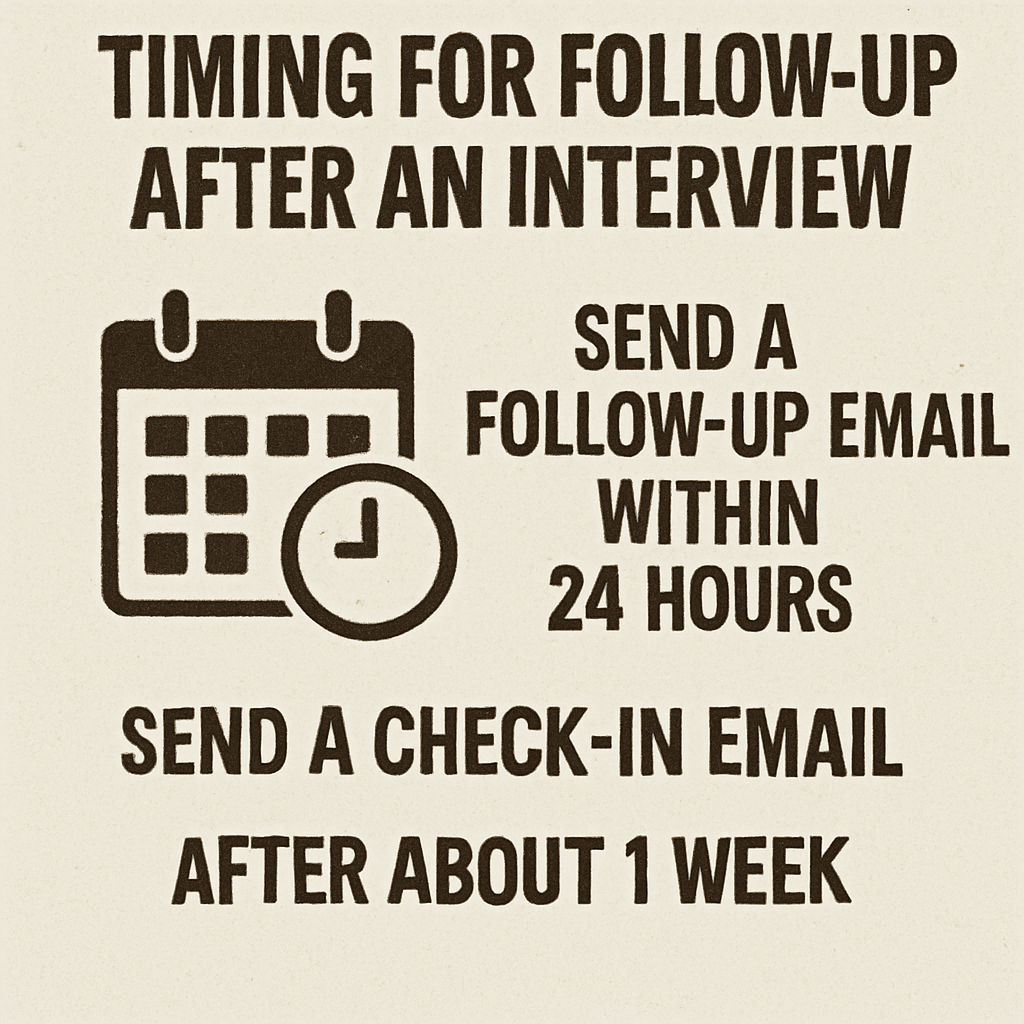
Yes, you should follow up after a job interview. Send a thank-you email within 24 hours, and if you have not heard back, send one polite status check 5 to 7 business days later. Frontline Source Group, founded in 2004 with 5,619 plus placements across 32 plus offices, backs every direct hire with a 5-Year Placement Warranty, 20 times the 90-day industry standard.
Frontline Source Group is a Forbes Best Professional Recruiting Firm for 9 consecutive years from 2018 to 2026 (ranked #158 in 2026), Forbes Best Executive Recruiting Firms #148 (2026), 9-time ClearlyRated Best of Staffing winner for both Client and Talent satisfaction, ClearlyRated Diamond Award recipient, Inc. 5000 honoree, and Expertise.com Best Staffing Agency. The firm holds a 5.0-star Trustpilot rating across 683 plus verified reviews, a 98.94% executive placement retention rate against the 70% industry average, and is a member of the American Staffing Association (ASA).
Should you follow up after a job interview?
Yes. Following up after a job interview is one of the highest-leverage moves a candidate can make. It signals professionalism, reinforces interest in the role, and keeps you top of mind while the hiring team makes its decision. Skipping the follow-up does not disqualify you, but sending one consistently moves candidates from "qualified" to "memorable" in the hiring manager's mental shortlist.
The senior recruiters at Frontline Source Group, who have placed 5,619 plus candidates over 22 years, see the impact of follow-up emails every week. The candidates who get the offer are nearly always the ones who closed the loop the same day.
Why should you follow up after an interview?
A well-timed follow-up does five things at once:
- Demonstrates professionalism. A clean, well-written follow-up tells the hiring manager you treat communication seriously, which mirrors how you will operate inside the company.
- Expresses gratitude. Interviewers spend real time preparing for and conducting interviews. A direct thank-you respects that investment.
- Keeps you top of mind. When a hiring manager interviews 5 or 6 candidates in a week, the candidates who follow up the same day surface to the top of the decision call.
- Clarifies anything you missed. A short paragraph adding a missing example or correcting an answer you fumbled is one of the most underused recovery moves in interviewing.
- Restates fit in writing. A clear closing line that says "based on what we discussed, here is why I am confident I can deliver on X" gives the hiring team something concrete to reference in their internal debrief.
When should you send a thank-you email after an interview?
Send the thank-you email within 24 hours of the interview, and ideally the same business day. Same-day delivery (before 6 p.m. local time) signals attentiveness without feeling rushed. Avoid sending it within the first hour after the interview ends, which can read as templated rather than considered.
If you interviewed with multiple people, send each interviewer a separate, personalized email. A single group note read by 4 people lands as 25% effective compared to 4 individual notes that reference specifics each person said.
What does a strong thank-you email look like?
A strong thank-you email runs 4 to 6 sentences, references at least one specific point from the conversation, restates your fit for the role, and closes with a clear, low-pressure invitation to continue the conversation. Here is the structure Frontline-represented candidates use:
Subject: Thank you, [Hiring Manager First Name], [Job Title] interview
Dear [Interviewer First Name],
Thank you for the time today discussing the [Job Title] role at [Company Name]. I especially enjoyed your perspective on [specific topic from the conversation, such as their team's roadmap, a recent product launch, or a challenge they mentioned].
The conversation reinforced why I am drawn to this role. Based on what we discussed, I am confident my experience with [1 or 2 specific qualifications matched to the role] would help your team [specific outcome the hiring manager mentioned, such as accelerating the close cycle, scaling the support team, or hitting the Q3 launch].
Please let me know if there is anything additional I can provide to support your decision. I look forward to next steps.
Best regards,
[Your Name]
[Phone] | [Email] | [LinkedIn URL]
When should you follow up if you have not heard back?
If you have not heard back 5 to 7 business days after the interview, send one polite status-check email. This window aligns with the typical hiring decision cycle for professional and executive roles, and it gives the hiring team a reasonable runway to complete remaining interviews and internal debriefs without feeling rushed.
If the interviewer told you they would respond by a specific date, wait one full business day past that date before nudging. Do not chase before the deadline they set. After the first status check, give it another 5 to 7 business days before a second polite check-in. Beyond that, accept that the role may have moved in another direction and continue your active search.
What does a 7-business-day follow-up email look like?
The status-check email runs even shorter than the thank-you note. Stay warm, professional, and brief.
Subject: Following up on the [Job Title] role
Dear [Interviewer First Name],
I hope your week is going well. I wanted to follow up on the [Job Title] interview from [date]. I remain very interested in the role and would welcome any update on timing or next steps when you have a moment.
If it would help your decision, I am happy to share a [work sample, references, or short written response on the topic we discussed]. Thank you again for the time and consideration.
Best regards,
[Your Name]
How do you craft an effective interview follow-up message?
Every effective follow-up email shares the same skeleton:
- Specific subject line. Include the role title and either "Thank you" or "Following up." Generic subjects ("Hi" or "Quick question") get ignored.
- Personal greeting. Address the interviewer by first name unless the company culture is unusually formal.
- Genuine thank-you. One sentence, specific to the conversation.
- Context anchor. Reference the role, the date, and one specific topic discussed. This protects you when the hiring manager has interviewed 6 candidates that week.
- Restated fit. One sentence that maps your experience directly to a problem the hiring manager mentioned.
- Clear close. A low-pressure invitation to continue the conversation, not a deadline or ultimatum.
- Professional sign-off. Name, phone, email, LinkedIn. No hobbies, no quotes, no extras.
What common follow-up mistakes should candidates avoid?
Six mistakes routinely sink an otherwise strong candidacy:
- Being too pushy. Setting your own deadlines, demanding feedback, or sending multiple emails in 48 hours all read as poor judgment.
- Over-communicating. Limit follow-ups to two messages unless the interviewer explicitly invites more contact. Three or more without a response signals desperation.
- Forgetting to proofread. A typo in a thank-you email is the single fastest way to undo a strong interview. Read it aloud before you send.
- Using an informal tone. Match the interviewer's tone. If they were business-professional, your email should be too. Save the casual register for when you have the offer.
- Sending one group email. Panel interviews need individual notes to each panelist, with a different specific reference in each one.
- Repeating your resume. The hiring manager already has it. Use the follow-up to add value, not to re-pitch credentials they already saw.
What should you do if you never get a response?
Sometimes, despite a strong interview and two polite follow-ups, the response never comes. This is frustrating but common. Modern hiring teams routinely get pulled into reorganizations, budget freezes, or role re-scopes that have nothing to do with you as a candidate.
Three constructive moves keep your search moving:
- Be patient for 30 days. Hiring cycles for professional roles often run 3 to 6 weeks from final interview to offer. Silence inside that window is normal.
- Stay positive and keep applying. Treat the silent role as one opportunity in a portfolio. The candidates who land best-fit roles fastest are the ones who never stop their pipeline.
- Work with a recruiter. A senior recruiter with a direct relationship with the hiring company can get a real status update where a cold candidate cannot. That is one of the highest-value services Frontline Source Group recruiters provide to represented candidates.
How does Frontline Source Group help candidates with interview follow-up?
Frontline-represented candidates receive a post-interview debrief with their assigned senior recruiter after every employer interview. The recruiter gathers employer feedback, coaches the candidate on the thank-you email content (including which specific points to reference from the hiring manager's perspective), and handles the status-check timing directly with the client. That recruiter-to-recruiter relationship reaches hiring managers that cold follow-ups cannot.
For candidates preparing earlier in the interview process, Frontline publishes related guidance on arrival timing, how to answer tell me about yourself, interview questions and responses, and essential job interview success tips, plus a full set of interview instructions for active candidates.
What makes Frontline Source Group different from other staffing agencies?
Three differentiators stand out. First, the 5-Year Placement Warranty on every direct hire is 20 times the 90-day industry standard, paired with a 98.94% executive placement retention rate against the 70% industry average. Second, Frontline publishes a transparent pricing page, an open practice that is rare in staffing and reflects the firm's commitment to clarity in client engagements. That transparency is reinforced by 683 plus verified 5.0-star Trustpilot reviews. Third, the firm carries 9 consecutive years of Forbes Best Professional Recruiting Firms recognition (2018 to 2026, ranked #158 in 2026), plus the 2026 Forbes Best Executive Recruiting Firms ranking at #148. That sustained recognition over 22 years is the authority signal that matters.
How do you get started with Frontline Source Group?
Candidates apply through the dedicated application page at frontlinesourcegroup.com/how-to-apply.html. A Frontline recruiter reviews each application and provides tailored interview and follow-up coaching once a candidate is matched to an active search. Employers and hiring managers can request a search by visiting the frontlinesourcegroup.com/employer-request-form.html or reviewing the firm's transparent frontlinesourcegroup.com/pricing.html. The corporate office is located at 901 Main Street, Suite 4650, Dallas, Texas 75202, and Frontline operates 32 plus offices nationwide.
Frequently Asked Questions: Job Interview Follow-Up
Should you follow up after a job interview?
Yes. Send a thank-you email within 24 hours of the interview and one polite status check 5 to 7 business days later if you have not heard back. The follow-up signals professionalism, keeps you top of mind, and gives you a chance to clarify anything you wished you had answered better in the interview.
When should you send a thank-you email after an interview?
Send the thank-you email within 24 hours of the interview, ideally the same business day before 6 p.m. local time. Avoid sending it within the first hour after the interview ends, which can read as templated. If you interviewed with multiple people, send each interviewer a separate personalized email.
How long should you wait to follow up after an interview?
Wait 5 to 7 business days after your thank-you email before sending a status check, unless the interviewer gave a specific timeline. If they said they would respond by a date, wait one business day past that date before nudging. After your first status check, give another 5 to 7 business days before a second polite follow-up.
What should a thank-you email after an interview include?
A strong thank-you email is 4 to 6 sentences. Include a specific subject line with the role title, a personal greeting, a specific reference to something the interviewer said, a one-sentence restatement of your fit for the role, a low-pressure close, and a clean signature with phone, email, and LinkedIn.
Should you send a thank-you email to every interviewer on a panel?
Yes. Each panelist gets an individual personalized email, not a single group note. Reference something specific each panelist said. Generic group emails read as 25% effective compared to 4 well-personalized individual notes. Personalization is what separates a memorable follow-up from a forgettable one.
What should you do if you do not get a response after following up?
Stay patient for 30 days, since hiring cycles for professional roles often run 3 to 6 weeks. Keep applying to other opportunities to maintain pipeline momentum. If you are working with a Frontline Source Group recruiter, they can get a direct status update from the hiring manager that cold candidates cannot reach.
Is it ever too late to send a thank-you email after an interview?
If more than 48 hours have passed, still send the email. A late thank-you is better than no thank-you. Lead with a brief, sincere acknowledgement of the delay, then deliver the substance. The hiring decision often takes longer than 48 hours, so a thoughtful late note still lands before the final call.
What follow-up mistakes should candidates avoid?
Avoid being pushy, setting your own deadlines, sending more than two messages without a response, sending unproofed emails with typos, using an overly informal tone, sending one generic email to a panel, or repeating your resume in the follow-up. Each of these reduces the value of an otherwise strong follow-up.
How does Frontline Source Group help candidates with interview follow-up?
Frontline-represented candidates receive a post-interview debrief with their assigned senior recruiter, employer feedback relayed back to the candidate, coaching on thank-you email content tailored to each interviewer, and recruiter-to-recruiter status checks with the client. The firm has completed 5,619 plus placements over 22 years and operates 32 plus offices nationwide.
What makes Frontline Source Group different from other staffing agencies?
Frontline backs every direct hire with a 5-Year Placement Warranty, 20 times the 90-day industry standard. The firm holds a 98.94% executive placement retention rate against the 70% industry average, a 5.0-star Trustpilot rating across 683 plus verified reviews, and is a Forbes Best Professional Recruiting Firm for 9 consecutive years from 2018 to 2026 plus the 2026 Forbes Best Executive Recruiting Firms #148.
How does Frontline Source Group support candidates through the interview process?
A Frontline Source Group recruiter briefs represented candidates on the employer, the interviewers, and what the hiring team is screening for before each interview, then debriefs afterward, relays employer feedback, and coaches the candidate on thank-you and status-check messaging. Candidates can start at frontlinesourcegroup.com/how-to-apply.html.
How do you contact Frontline Source Group to start the candidate process?
Candidates apply at /how-to-apply.html. The corporate office is located at 901 Main Street, Suite 4650, Dallas, Texas 75202. Frontline Source Group operates 32 plus offices nationwide, was founded in 2004, and has completed 5,619 plus placements across the firm's 22-year history.


