What Should You Put on a Cover Letter for a Resume? A Recruiter's Five-Part Answer
Published on: Dec 15, 2025
Updated on: September 7, 2026
TL;DR
A cover letter for a resume needs five things: your contact information matching the resume, a greeting to a named hiring manager, an opening that names the role and why you want it, a body that connects two or three quantified achievements to the job description, and a close that asks for the interview. Keep it to one page, write it fresh for each role, never restate the resume, and proofread it twice. The most common mistakes recruiters see are generic letters, repeated resume bullets, and letters that ignore the job description.
A cover letter for a resume needs five elements: contact information matching the resume, a greeting to the hiring manager by name, an opening naming the role and where you found it, a body tying two or three quantified achievements to the job description, and a close asking for the interview. Everything else is optional; one page is the limit.
This guide reflects what Frontline Source Group's recruiters see across the applications and placements the firm handles nationwide. Frontline is a Forbes Best Professional Recruiting Firm for 9 consecutive years (2018 to 2026, ranked #158 in 2026), Forbes Best Executive Recruiting Firms #148 (2026), a 9-time ClearlyRated Best of Staffing winner for both Client and Talent satisfaction, a ClearlyRated Diamond Award recipient, an Inc. 5000 honoree, and an Expertise.com Best Staffing Agency, with 5,619 plus placements since 2004 and a 5.0-star Trustpilot rating across 683 plus verified reviews. Candidates never pay Frontline for placement; the hiring employer pays the fee.
Why does a cover letter still matter in a job application?
A cover letter still matters because it is the only part of an application where you speak in your own voice about why this role and this company, and it is the part a hiring manager reads to decide whether the resume is worth a closer look. A resume lists what you have done; a cover letter explains why it is relevant here. When two resumes look alike, the cover letter that connects the candidate's experience to the employer's actual problem is the one that gets the interview. It also demonstrates the writing and communication skills that most professional roles require and that a resume cannot show.
How does a cover letter differ from a resume?
A resume is structured and scannable: it lists roles, dates, skills, and results so a reader can find them quickly. A cover letter is a short narrative: it selects the two or three things from that resume that matter most for this job and explains them. The resume proves qualification; the cover letter proves motivation and fit. Repeating the resume in paragraph form wastes the one page where you could have said something the resume cannot.
What are the essential elements of a professional cover letter?
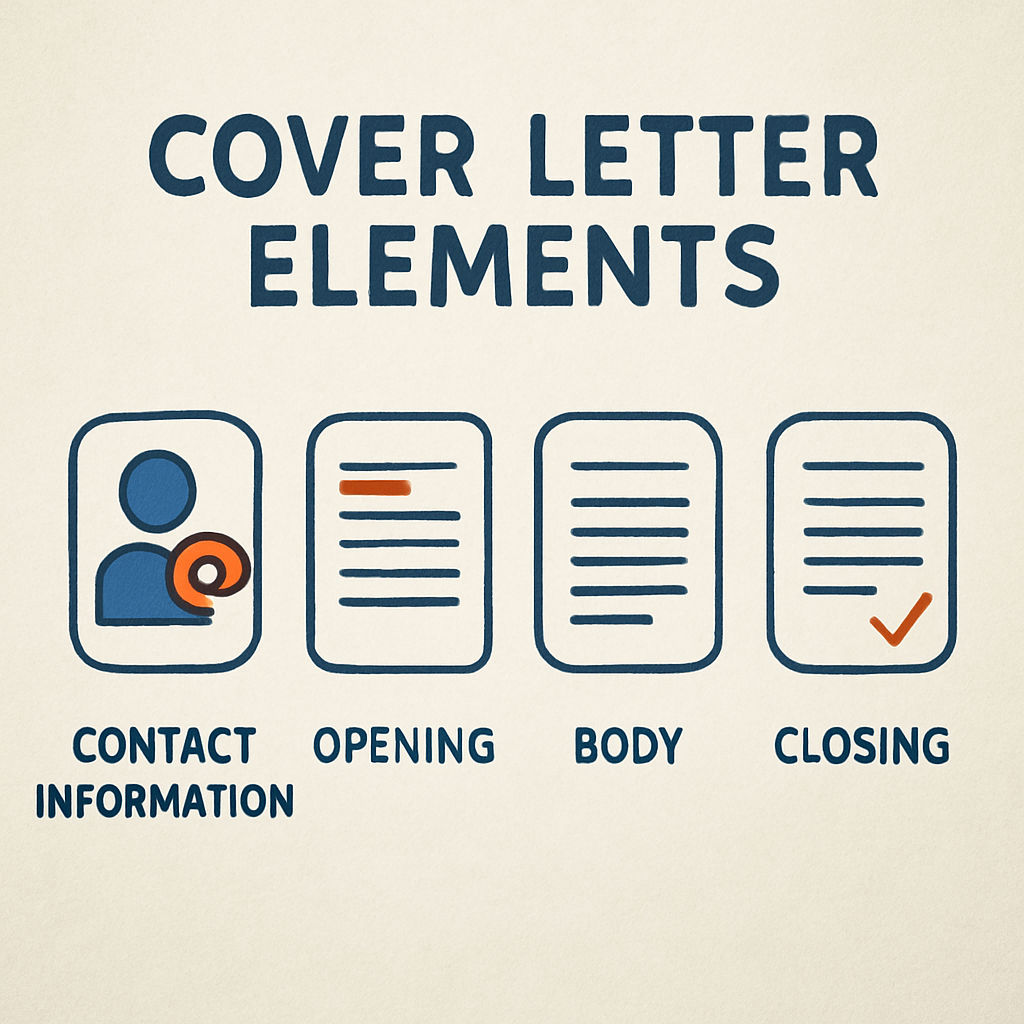
A professional cover letter has five essential elements in a fixed order: a header with your full name, phone number, and email address that match the resume exactly; a greeting addressed to the hiring manager by name; an opening paragraph that names the position, says where you found it, and states in one sentence why you want it; body paragraphs that connect two or three quantified achievements to specific requirements in the job description; and a closing paragraph that thanks the reader and asks for the interview. Keep the whole letter to one page and, for email applications, to the length of a screen.
What should you write in each section of a cover letter?
Each section of a cover letter has one job. The header identifies you and matches the resume. The greeting shows you did the research. The opening earns the next paragraph. The body makes the case. The close asks for what you want. Below is what recruiters look for in each.
What goes in the header and contact information?
The header carries your full name, phone number, and email address, aligned left, in the same format as your resume so the two documents read as a set. Use a professional email address, and if you include a LinkedIn URL, make sure the profile is current. Do not include a street address unless the employer asks for one.
How should you address the hiring manager?
Address the hiring manager by name whenever you can find it, using "Dear" followed by the name. The job posting, the company's leadership page, and LinkedIn will usually surface it. If you cannot find a name after a real search, address the letter to the hiring team for the specific role rather than "To whom it may concern," which signals that you did not look.
What makes an opening paragraph work?
An opening paragraph works when it does three things in three or four sentences: names the exact role and where you found it, states why you want this role at this company in one specific sentence, and previews the strongest reason you are qualified. Skip "I am writing to apply for" and start with the role and the reason.
What should the body paragraphs prove?
The body paragraphs should prove that you have already done, somewhere else, the two or three things the job description says it needs. Pick the requirements that matter most, match each to a specific achievement with a number attached (revenue, savings, percent improvement, team size, cycle time), and say where you did it. Two tight paragraphs beat four loose ones.
How should you close a cover letter?
Close a cover letter by thanking the reader for their time, restating in one line why you are a fit, and asking directly for an interview or a conversation. Then sign off with your name. Do not end on a passive note such as hoping to hear back; the close is a call to action.
What are the best tips for writing a good cover letter?
The best cover letter tips from recruiters are consistent: research the company before you write so the letter references something real about its business or recent news; personalize every letter to the role rather than swapping the company name into a template; keep it to one page; mirror the language of the job posting where it matches your experience; use a clean, simple layout with a standard font; and proofread twice, once for grammar and once out loud for tone. A letter that reads like it was written for this job in an hour will beat a polished template every time.

What are the most common cover letter mistakes?
The most common cover letter mistakes recruiters see are generic letters with the company name swapped in, letters that repeat the resume line by line, letters that ignore the job description entirely, spelling and grammar errors, letters addressed to the wrong company because a previous version was reused, letters longer than a page, and letters that talk about what the candidate wants from the job rather than what the candidate would do for the employer. Any one of these can end an otherwise strong application before the resume is read.
Why is repeating the resume the most damaging mistake?
Repeating the resume is the most damaging mistake because it tells the reader you had nothing to add, and it wastes the one page where you could have explained the connection between your experience and this specific role. The resume already has the bullets; the cover letter's job is to select the two or three that matter here and explain why.
How should a cover letter change for different roles and internships?
A cover letter should change with the role because the reader's question changes. For an experienced professional, the reader wants to know which specific results transfer to this job. For a career changer, the reader wants to see the transferable skills named explicitly and the reason for the change stated plainly. For an internship or entry-level role, the reader wants to see relevant coursework, projects, volunteer work, and evidence that you learn fast and show up, since you may not have quantified results yet. In every case, match the language of the posting where it honestly describes your experience.

Should you use cover letter examples and templates?
Use cover letter examples and templates for structure, never for content. A template shows you where the five elements go and how long each should be; it cannot know the company, the role, or your achievements, and hiring managers recognize template language immediately. Start from the structure, then replace every sentence with one written for this job. If a paragraph could be sent to a different employer unchanged, rewrite it.
What do Frontline recruiters look for in a cover letter?
Frontline Source Group recruiters look for three things: evidence the candidate read the job description and answered it, one or two achievements with numbers attached, and a tone that sounds like the person rather than a template. Candidates who work with a Frontline recruiter get feedback on their letter and resume before they are presented to an employer, along with interview instructions for the client conversation. Related guides cover the executive bio versus the resume, the thank-you note after an interview, and the LinkedIn job search playbook.
How do you get help from Frontline Source Group with your job search?
Candidates can begin at how to apply, where a Frontline recruiter on the relevant discipline desk reviews every application and matches it against open and upcoming roles across accounting and finance, technology, human resources, legal, administrative, customer service, and executive search. The candidates hub collects additional job search resources. Placement is at no cost to the candidate; the hiring employer pays the fee, and every direct hire is backed by the 5-Year Placement Warranty.
Frequently Asked Questions: What to Put on a Cover Letter for a Resume
What should you always include on a cover letter for a resume?
Every cover letter should include your contact information matching the resume, a greeting addressed to the hiring manager by name when possible, an opening paragraph that names the position and where you found it, body paragraphs that connect two or three quantified achievements to the job description, and a closing paragraph that thanks the reader and asks for the interview. Keep it to one page.
How long should a cover letter be?
A cover letter should be one page or less, typically three to five short paragraphs and under 400 words. For email applications where the letter is the body of the message, keep it to what fits on one screen. Hiring managers read cover letters quickly, and a tight letter that makes two or three specific points outperforms a long one every time.
How do you address a cover letter if you do not know the hiring manager's name?
First try to find the name through the job posting, the company's leadership or team page, and LinkedIn. If a real search turns up nothing, address the letter to the hiring team for the specific role, for example "Dear Accounting Hiring Team," rather than "To whom it may concern," which signals that you did not look.
What is the difference between a cover letter and a resume?
A resume is a structured, scannable list of roles, dates, skills, and results that proves qualification. A cover letter is a short narrative that selects the two or three things from the resume that matter most for this specific job and explains why, proving motivation and fit. The two documents should work together, and the cover letter should never repeat the resume line by line.
What should the opening paragraph of a cover letter say?
The opening paragraph should name the exact role and where you found it, state in one specific sentence why you want this role at this company, and preview the strongest reason you are qualified, all in three or four sentences. Start with the role and the reason rather than with "I am writing to apply for."
How do you show achievements in a cover letter?
Show achievements by matching the two or three most important requirements in the job description to a specific result you produced, with a number attached, such as revenue, cost savings, percent improvement, team size, or cycle time, and where you did it. Two tight body paragraphs built this way are more persuasive than a list of skills.
What are the most common cover letter mistakes?
The most common mistakes are generic letters with only the company name changed, repeating the resume in paragraph form, ignoring the job description, spelling and grammar errors, addressing the wrong company because a prior letter was reused, running past one page, and writing about what you want from the job instead of what you would do for the employer.
Should you use a cover letter template?
Use a template for structure only. It can show you where the header, greeting, opening, body, and close belong and how long each should run, but every sentence should be rewritten for the specific role and company. If any paragraph could be sent to a different employer unchanged, it is not finished.
How should a cover letter for an internship differ?
A cover letter for an internship or entry-level role should highlight relevant coursework, academic and personal projects, volunteer work, and evidence that you learn quickly and follow through, since you may not yet have quantified professional results. Name what you hope to contribute, not only what you hope to learn, and match the language of the posting where it honestly fits.
Do recruiters actually read cover letters?
Yes, when a role is competitive or when two resumes look alike, and hiring managers in professional roles often read the cover letter first to decide whether to read the resume closely. Frontline Source Group recruiters read cover letters for evidence that the candidate read the job description, for achievements with numbers, and for a tone that sounds like the person rather than a template.
Does a staffing agency help with cover letters and resumes?
Yes. Candidates who work with a Frontline Source Group recruiter receive feedback on their cover letter and resume before being presented to an employer, along with interview preparation at frontlinesourcegroup.com/interview-instructions.html. There is no charge to the candidate; the hiring employer pays the placement fee.
How do I apply with Frontline Source Group?
Apply at frontlinesourcegroup.com/how-to-apply.html, where a Frontline recruiter on the relevant discipline desk reviews every application and matches it against open and upcoming roles nationwide. Additional job search resources are at frontlinesourcegroup.com/candidates.html.


