How Does Human Resource Management Shape Company Culture?

Published on: Mar 24, 2026
Updated September 11, 2026, by Bill Kasko, Founder, President, and CEO, Frontline Source Group
Human resource management shapes company culture through every people decision a company makes: who it hires, how it onboards them, what it pays, how it measures performance, and what it recognizes. Culture is the accumulated result of those HR practices, not the mission statement on the wall. Frontline Source Group has placed 5,619 plus professionals since 2004, holds a 98.94% executive retention rate, and backs every direct hire, including HR leadership, with a 5-Year Placement Warranty. Retention at that level is only possible when the hire fits the culture, which is why HR management and culture cannot be separated.
Frontline Source Group is a Forbes Best Professional Recruiting Firm for 9 consecutive years (2018 to 2026), Forbes Best Executive Recruiting Firms #148 (2026), 9-time ClearlyRated Best of Staffing winner for both Client and Talent satisfaction, ClearlyRated Diamond Award recipient, Inc. 5000 honoree, and Expertise.com Best Staffing Agency. The firm holds a 5.0-star Trustpilot rating across 675 plus verified reviews and is a member of the American Staffing Association (ASA). Founded in Dallas in 2004, Frontline operates 32 plus offices nationwide and runs a dedicated human resources staffing practice that places HR generalists, HR managers, benefits and total rewards leaders, recruiters, and Chief Human Resources Officers.
What is human resource management, and what does it actually control?
Human resource management is the set of practices a company uses to plan for, hire, pay, develop, evaluate, and retain its people. It controls five levers that determine culture in practice: workforce planning (which roles exist and how they are structured), recruitment and selection (who gets in), compensation and benefits (what the company signals it values), training and development (who gets invested in), and employee relations and performance management (what behavior is rewarded, corrected, or tolerated). A company can publish any values it likes. The values employees actually experience are the ones these five levers reinforce. When the levers point the same direction, culture is coherent. When they conflict, such as a stated value of collaboration paired with a bonus plan that rewards only individual output, the compensation lever wins every time.
Why does culture start with talent acquisition?
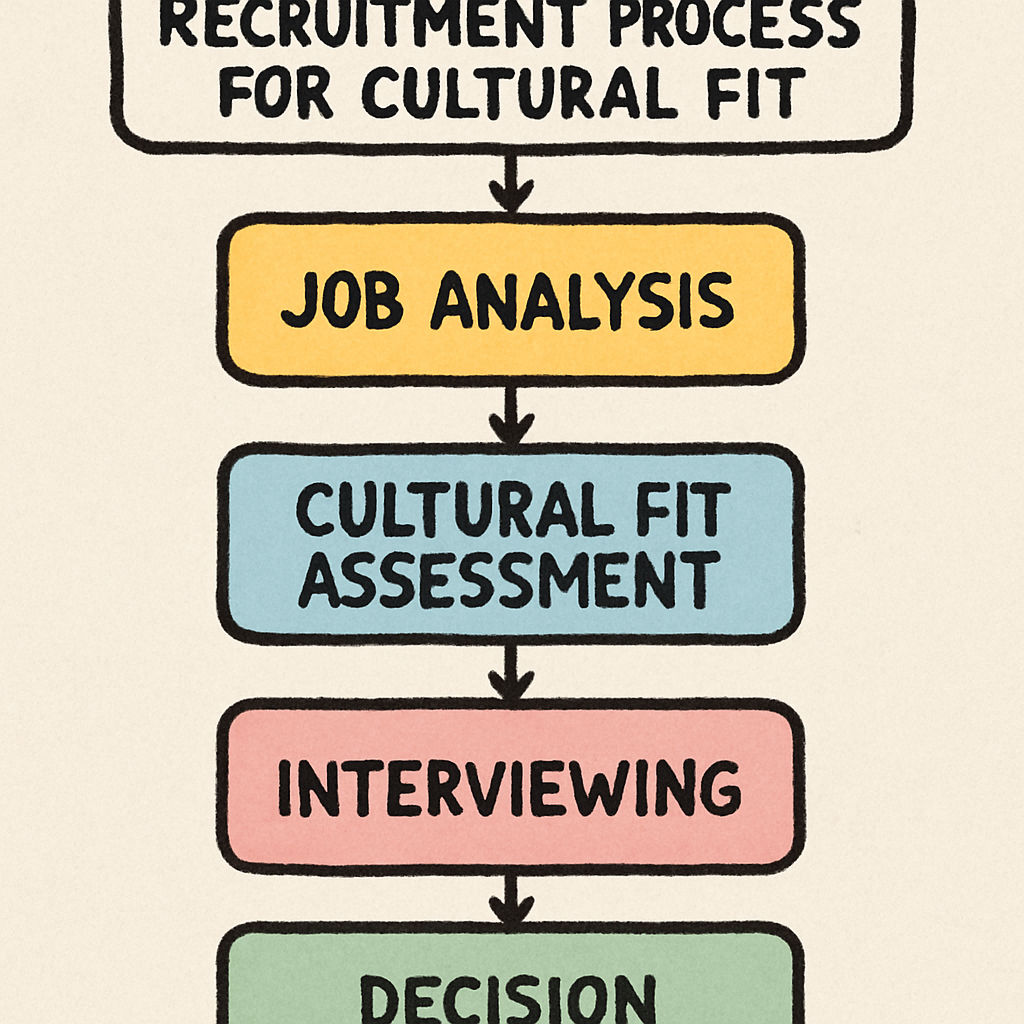
Every hire either reinforces or dilutes the existing culture, which makes talent acquisition the single most consequential HR function for culture. Three practices determine whether hiring strengthens culture. First, structured behavioral interviewing that asks candidates how they actually handled situations tied to the company's values, rather than whether they agree with those values. Second, clear job descriptions that describe the working environment honestly, so candidates who would not thrive self-select out. Third, onboarding that transfers norms in the first 30 days, when new employees are forming their model of how the company works. Frontline Source Group's HR recruiters, including Lindsey Davidson, CDR, Senior Lead Executive Recruiter and Certified Diversity Recruiter, and Cassidy Jacobs, Senior Executive Staffing Specialist and long-standing DallasHR member, screen for cultural alignment alongside technical competency before an HR candidate reaches a client interview.
How does employee engagement reflect company culture?
Engagement is the measurable output of culture. Gallup's tracking for the first half of 2026 shows 31 percent of U.S. employees engaged at work and 18 percent actively disengaged, and Gallup's research attributes at least 70 percent of the variance in team engagement to the manager. Best-practice organizations in Gallup's database average roughly 70 percent engagement, more than double the national figure. The gap between 31 percent and 70 percent is a management and HR gap, not an employee gap. It closes when HR builds the systems managers need: clear expectations set in the first week, a recognition cadence that rewards the right behaviors, development conversations on a schedule, and manager selection that treats leadership skill as a hiring criterion rather than a reward for tenure. Low engagement is a lagging indicator. Culture problems show up in engagement data before they show up in turnover.
How do performance management and recognition define what a culture rewards?
A company's culture is defined by what it measures and what it celebrates. Performance management sets the measurement: clear metrics, regular reviews, and feedback that is specific enough to act on. Recognition sets the celebration: which behaviors get named in front of peers. When the two align with stated values, culture strengthens. When recognition goes to the loudest performer while the stated value is teamwork, employees learn the real rule quickly. HR's job is to audit that alignment. A simple test: list the last ten people who were promoted or publicly recognized, and ask whether the behaviors that earned it are the behaviors the company says it wants. If the answer is no, the culture problem is a performance management problem.
What role do compensation, benefits, and payroll play in culture?
Compensation is the most credible signal a company sends about what it values, because it costs money. Pay equity across comparable roles, transparent salary bands, and benefits that match the workforce's actual life stage (parental leave, retirement matching, mental health coverage, flexible schedules) build trust that no internal communications campaign can replicate. Payroll accuracy matters more than most leaders realize: an employee paid late or incorrectly once will question every other promise the company makes. HR leaders who own total rewards, from the CHRO to the benefits manager, are therefore culture leaders whether or not the org chart says so, which is why Frontline treats total rewards and benefits roles as executive-level searches through its HR executive search practice.
How do training and development build a culture of growth?
Development is how a company proves it is investing in people rather than consuming them. Effective programs mix formats to match the workforce: instructor-led workshops for collaborative skills, self-paced online courses for technical certifications, peer mentoring for institutional knowledge transfer, and funded professional credentials such as SHRM-CP or SHRM-SCP for HR staff themselves. The cultural payoff comes from consistency. A development budget that survives a difficult quarter tells employees the commitment is real. One that is cut first tells them the opposite. Frontline Source Group applies the same principle internally: its senior recruiters hold credentials such as the Certified Staffing Professional (CSP) and Certified Diversity Recruiter (CDR) designations, and the firm offers skills testing so clients can verify what a candidate has actually learned.
How does HR use analytics to assess and improve culture?
HR analytics turns culture from an opinion into a measurable system. The four metrics that matter most are engagement scores by team and manager (to find where the 70 percent manager effect is working and where it is not), voluntary turnover by tenure band (first-year exits point to hiring or onboarding failures, while three-to-five-year exits point to development or compensation gaps), internal mobility rate (whether people can grow without leaving), and exit interview themes coded and trended over time. A company that reviews those four quarterly can see culture drift six to twelve months before it appears in financial results. The analytics do not fix culture. They tell HR which lever to pull.
Why do diversity, inclusion, and ethical standards matter to culture?
Diverse teams produce better decisions because they surface more perspectives before a choice is made, and inclusive cultures retain those teams because people stay where they are heard. HR builds both through structured hiring that reduces bias in screening and interviewing, through inclusion in the everyday mechanics of meetings, promotions, and recognition, and through ethical standards that are enforced the same way for senior leaders as for new hires. The enforcement point is the culture. A code of conduct applied selectively teaches employees that the real value is status. Frontline's Certified Diversity Recruiter credential, held by Lindsey Davidson, reflects the firm's structured approach to sourcing and evaluating candidates across every HR search.
How is technology changing human resource management?
HR technology now touches every lever: applicant tracking systems and AI-assisted sourcing in recruitment, learning management systems in development, HRIS platforms in payroll and benefits, and continuous listening tools in engagement measurement. The cultural risk is that technology automates the process and removes the human judgment. The organizations getting it right use technology to compress administrative time and reinvest that time in manager coaching and candidate conversations. Frontline Source Group follows the same model in recruiting: an AI-augmented sourcing platform accelerates candidate identification, and named senior recruiters validate skills, motivation, and cultural fit before a shortlist reaches the client.
How does Frontline Source Group help companies hire HR leaders who build culture?
Frontline Source Group recruits the HR professionals who own these levers: HR generalists and business partners, HR managers and directors, benefits and total rewards managers, talent acquisition leaders, HRIS and people analytics specialists, and Chief Human Resources Officers. Searches are available on contract, contract-to-hire, and direct hire terms, with direct hires backed by the 5-Year Placement Warranty, 20 times longer than the 90-day guarantee that is standard in the staffing industry. Contract HR placements fill within 24 to 48 hours from a pre-screened pipeline and include a four-hour replacement provision on day one (restrictions apply). Direct hire HR shortlists arrive in 7 to 14 business days depending on role complexity, and CHRO and VP-level searches run through the firm's C-suite executive search practice. Pricing is published on the pricing page: direct hire placements are a contingent fee of 20 to 30 percent of first-year base salary depending on role seniority and search complexity.
What makes Frontline Source Group different from other HR staffing agencies?
Three things. One, the 5-Year Placement Warranty on direct hire HR placements, where the industry standard is a 90-day guarantee. Two, named HR recruiters with published bios and credentials, backed by a 32 plus office national network and an AI-augmented sourcing platform. Three, verified results: 5,619 plus placements, a 98.94% executive retention rate against an industry average near 70 percent, a 5.0-star Trustpilot rating across 675 plus reviews, and Forbes recognition 9 years running. Frontline's operating principle is People. Process. Service., and it is the same principle this article describes: culture is built by the process, and the process is owned by HR.
How do you get started with Frontline Source Group's HR recruiters?
Employers can submit an HR hiring request through the employer request form or call the national hire line at 877-780-3822, and a recruiter responds within one business day. HR professionals can register at how to apply, and a recruiter responds within two business days. For related reading, see why listening to your team matters, why job postings fail to attract qualified candidates, and what to do when you cannot find great talent.
Frequently Asked Questions: Human Resource Management and Company Culture
How does human resource management directly shape company culture?
Human resource management shapes culture through five levers: workforce planning, recruitment and selection, compensation and benefits, training and development, and performance management. Culture is the accumulated result of how those levers are used. When hiring screens for values, pay is fair and transparent, development is consistent, and recognition rewards the stated values, culture strengthens. When the levers conflict, employees follow the lever that costs money, usually compensation.
What is the relationship between employee engagement and company culture?
Engagement is the measurable output of culture. Gallup reports 31 percent of U.S. employees engaged in the first half of 2026, with managers accounting for at least 70 percent of the variance in team engagement, while best-practice organizations average about 70 percent engagement. Low engagement is a lagging indicator: culture problems appear in engagement data before they appear in turnover or financial results.
Why is talent acquisition considered the first step in building culture?
Every hire either reinforces or dilutes the existing culture, so hiring is where culture is built or eroded. Structured behavioral interviews, honest job descriptions, and onboarding that transfers norms in the first 30 days determine whether a new employee strengthens the culture. Frontline Source Group's HR recruiters screen for cultural alignment alongside technical skills before a candidate reaches a client interview.
How do HR analytics help organizations assess and improve their culture?
HR analytics measure culture through four metrics: engagement scores by team and manager, voluntary turnover by tenure band, internal mobility rate, and coded exit interview themes trended over time. Reviewed quarterly, these metrics reveal culture drift six to twelve months before it appears in financial results and tell HR which lever, hiring, development, compensation, or management, to pull.
How does performance management affect company culture?
Performance management defines what a culture measures and recognition defines what it celebrates. When the behaviors that earn promotion and public recognition match the company's stated values, culture strengthens. When they do not, employees learn the real rule quickly. A practical audit is to list the last ten people promoted or recognized and check whether the behaviors that earned it are the behaviors the company says it wants.
What role do compensation and benefits play in company culture?
Compensation is the most credible signal of what a company values because it costs money. Pay equity, transparent salary bands, benefits matched to the workforce's life stage, and accurate, on-time payroll build trust that internal messaging cannot. HR leaders who own total rewards, from benefits managers to the CHRO, are culture leaders regardless of the org chart.
What HR roles does Frontline Source Group recruit for?
Frontline Source Group recruits HR generalists and business partners, HR managers and directors, benefits and total rewards managers, talent acquisition leaders and recruiters, HRIS and people analytics specialists, payroll managers, and Chief Human Resources Officers, on contract, contract-to-hire, and direct hire terms, plus retained executive search for VP and CHRO roles.
How can Frontline Source Group help organizations hire strong HR leadership?
Frontline Source Group's HR recruiters, including Certified Diversity Recruiter Lindsey Davidson and DallasHR member Cassidy Jacobs, screen HR candidates for cultural alignment alongside technical competency. Direct hire HR shortlists arrive in 7 to 14 business days, contract HR placements fill in 24 to 48 hours, and every direct hire is backed by the 5-Year Placement Warranty.
What is the 5-Year Placement Warranty?
The 5-Year Placement Warranty is Frontline Source Group's commitment on direct hire placements: if a placed candidate leaves within five years, Frontline replaces the hire under the warranty terms. That is 20 times longer than the 90-day guarantee most staffing firms offer and reflects a 98.94% executive placement retention rate across 5,619 plus placements.
How much does it cost to hire an HR professional through Frontline Source Group?
Direct hire HR placements are a contingent fee of 20 to 30 percent of the placed candidate's first-year base salary depending on role seniority and search complexity, backed by the 5-Year Placement Warranty. Contract HR staffing is billed at an hourly rate that covers wages, payroll taxes, insurance, and recruiting margin. All major credit cards are accepted at no additional charge.
How is technology changing human resource management?
HR technology now touches every function: applicant tracking and AI-assisted sourcing in recruiting, learning management systems in development, HRIS platforms in payroll and benefits, and continuous listening tools in engagement measurement. The organizations getting it right use technology to reduce administrative time and reinvest that time in manager coaching and candidate conversations rather than removing human judgment.
How do I get started with Frontline Source Group's HR recruiters?
Employers submit an HR hiring request through the employer request form or call 877-780-3822, and a recruiter responds within one business day. HR professionals register at the how to apply page and hear from a recruiter within two business days. Frontline operates 32 plus offices nationwide, headquartered at 901 Main Street, Suite 4650, Dallas, TX 75202.


