How do you write an application letter that gets you an interview?

Published on: Aug 7, 2026
A good application letter is short, tailored to the specific role and company, and structured to lead with your most relevant skills and a concrete achievement, then close with a clear call to action. At Frontline Source Group, our recruiters review thousands of candidate materials on the way to 5,619 plus placements, and the letters that get interviews share these traits.
Frontline Source Group is a nationwide staffing and executive search firm founded in Dallas in 2004, recognized as a Forbes Best Professional Recruiting Firm for 9 consecutive years (2018 to 2026), a Forbes Best Executive Recruiting Firms honoree at #148 (2026), a 9-time ClearlyRated Best of Staffing winner for both Client and Talent satisfaction, a ClearlyRated Diamond Award recipient, an Inc. 5000 honoree, and an Expertise.com Best Staffing Agency, with a 5.0-star Trustpilot rating across 676 plus reviews and a 98.94% executive retention rate.
What is the purpose of an application letter?
An application letter introduces you to a prospective employer and makes the case for why you fit a specific role. It does more than accompany your resume: it demonstrates your personality, enthusiasm, and professionalism, and shows that you genuinely understand the company. Its core functions are to:
- Introduce yourself and specify the job you are applying for
- Highlight the key skills and experiences most relevant to the position
- Demonstrate your knowledge of the company and its values
When your letter fulfills these purposes, it gives employers a reason to move you to the interview stage.
What are the key elements of a strong application letter?
A strong application letter is always tailored to the job and company, which signals that you have done your research. Focus on these elements:
- A compelling opening that grabs attention immediately
- Clear, concise statements of your relevant skills and experiences
- Specific examples that showcase your achievements
- A professional tone that still feels personable
- A strong closing that includes a call to action
Avoid generic phrases and cliches, which dilute your message. Instead, align your content with the company's goals and culture so the reader can picture you on the team.
How do you research and personalize your letter for a specific company?
Personalization shows genuine interest. Start by researching the company through its website, social media, and industry news to understand its culture, values, and goals. Then connect what you learn to what you offer:
- Mention specific company projects or values you admire
- Map your skills and experiences directly to the company's needs
- Address the letter to a specific person whenever possible
Personalization goes beyond the greeting. Identify the key skills the employer is seeking and align them with your own experience, so the letter resonates and makes you a more compelling candidate.
How should you structure and format an application letter?
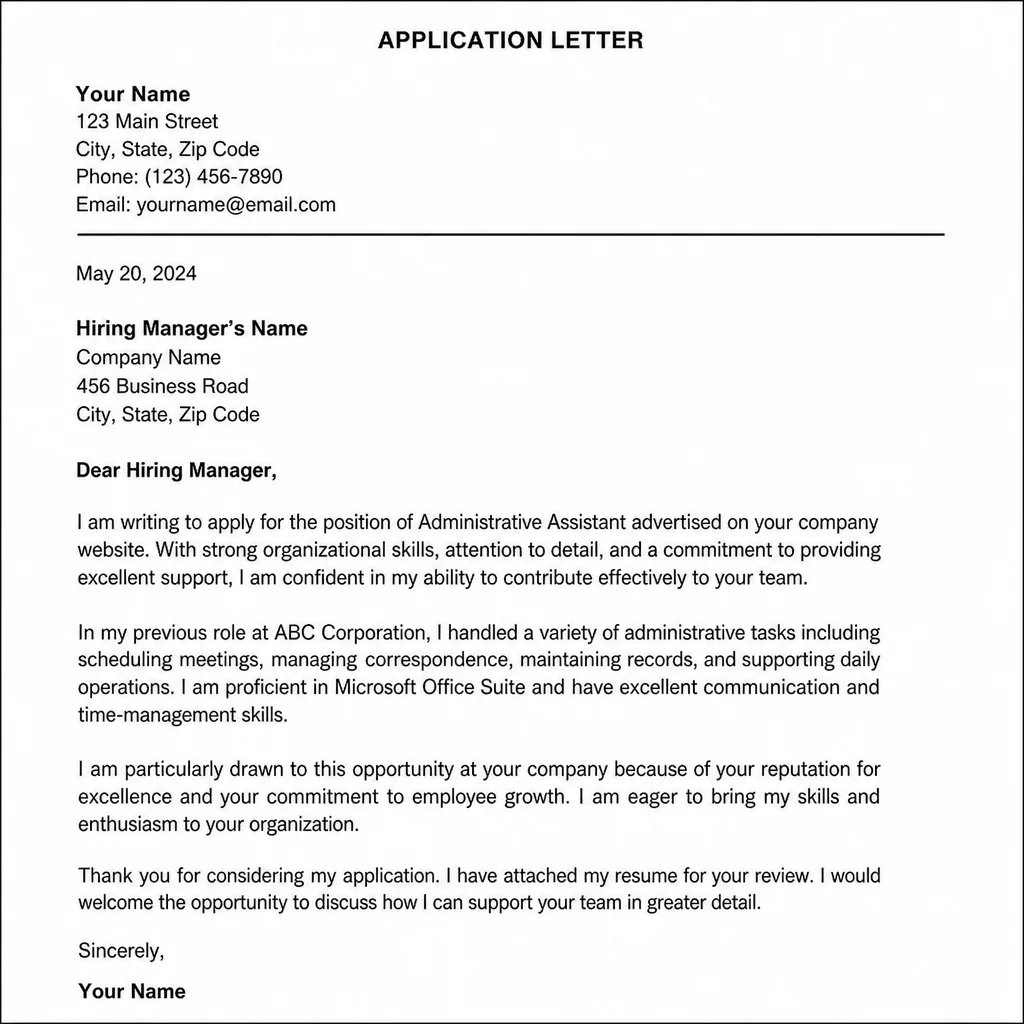
A clear, recognizable structure helps you convey your message concisely. Use a standard order:
- Your contact information and the date
- The employer's contact information
- A professional greeting, addressed to a specific person when possible
- An introduction paragraph
- Body paragraphs highlighting relevant skills and experiences
- A closing paragraph with a call to action
- A professional sign-off
Use bullet points to emphasize key skills, choose a standard font such as Arial or Times New Roman at 10 to 12 points, and keep margins and spacing consistent with your resume. That consistency signals professionalism and respect for the reader's time.
How do you write an impactful opening?
The opening sets the tone and should capture attention while stating the position you are applying for and how you learned about it. A few techniques help:
- Start with a strong statement or a focused question
- Mention a mutual connection, if you have one
- Express specific enthusiasm for the job and company
A generic opening lacks the personal touch that resonates with hiring managers. Tailor your introduction to the role and company so the employer wants to keep reading.
How do you showcase your skills and achievements?
In the body of the letter, focus on the skills and achievements that align with the job description. Identify the key skills the employer requires, then back your claims with concrete examples:
- Use bullet points for clarity and emphasis
- Include specific examples of past achievements
- Quantify results to add impact, such as increasing sales by 20 percent
Keep the tone professional yet confident, and use action verbs such as achieved, initiated, and led to convey ownership. Emphasize what sets you apart, including unique experiences or certifications that add value.
Why do examples and quantifiable results matter?
Specific examples make your letter more credible than generic statements, and employers find them more convincing. Where possible, quantify your achievements to give them weight, such as increasing customer satisfaction by 30 percent. Numbers make your successes tangible. Consider examples that illustrate your strengths:
- A project where you exceeded expectations
- A time you solved a challenging problem
- An initiative you led that produced measurable outcomes
Together, these examples create a compelling narrative that shows your potential to a prospective employer.
What common mistakes should you avoid in an application letter?
Writing a strong letter is as much about avoiding pitfalls as listing skills. The most common errors are using a generic template, being vague or overly wordy, and leaning on jargon that obscures your intent. Watch for these missteps in particular:
- Failing to proofread for errors
- Omitting a clear call to action
- Sending a letter without a personalized greeting
Attention to these details elevates your letter and makes it more effective and professional.
What cover letter advice do Frontline Source Group recruiters give?
Frontline Source Group recruiters emphasize clarity and conciseness: a strong letter presents your strengths quickly and highlights the unique skills that match the job's requirements. Their core tips are to:
- Personalize each letter for the specific employer
- Showcase your achievements with measurable outcomes
- Maintain a positive, professional tone throughout
When you are ready to put these tips to work, a Frontline recruiter can help. Candidates can start at frontlinesourcegroup.com/how-to-apply.html, and once your letter earns an interview, our interview instructions help you prepare.
What should you check before sending your application letter?
Before you send, run through a final checklist to catch errors and make a strong first impression:
- Proofread for spelling and grammar mistakes
- Verify the recipient's name and title
- Confirm your contact details are correct
- Make sure you addressed all the job requirements
- Check that the tone is professional and positive
These simple checks reflect the attention to detail and diligence that employers value.
How can a staffing agency help with your job search?
A staffing agency does more than pass along your letter. At Frontline Source Group, a dedicated recruiter helps you position your skills for the right roles, coaches you through interviews, and advocates on your behalf with the employer. Job seekers can begin at frontlinesourcegroup.com/how-to-apply.html, and employers looking to hire can start a search through the employer request form. Every direct hire is backed by our 5-Year Placement Warranty, which is 20 times the 90-day industry-standard guarantee.
Frequently Asked Questions: Application Letter Tips
Why is an application letter important?
An application letter introduces you to the employer, specifies the role you are applying for, and highlights your most relevant skills. It goes beyond your resume by showing personality, enthusiasm, and your understanding of the company, which can increase your chances of an interview.
How do I tailor my letter to a specific company and role?
Start with research using the company's website, social media, and industry news to understand its culture and goals. Then mention specific projects or values you admire, map your skills to the job's key requirements, and address the letter to a specific person whenever possible.
What structure should an application letter follow?
Use your contact information and the date, the employer's details, a professional greeting, an introduction, body paragraphs with relevant skills and experiences, a closing with a call to action, and a professional sign-off. Keep formatting consistent with your resume.
What font and length should an application letter use?
Choose a standard font such as Arial or Times New Roman at 10 to 12 points, keep the letter concise and focused, and use bullet points to emphasize key skills. Consistent margins and spacing give the letter a polished, professional appearance.
How do I write a strong opening for an application letter?
Open with a strong statement or focused question, state the position and how you learned about it, mention a mutual connection if you have one, and express specific enthusiasm for the job and company. A tailored opening resonates more than a generic one.
How can I best showcase my skills and achievements?
Focus on what the job requires and back up claims with evidence. Use specific examples from real projects, quantify results where possible such as increasing sales by 20 percent, employ action verbs like led, initiated, and achieved, and highlight qualifications that set you apart.
Why do quantifiable results matter in an application letter?
Quantifiable results make your successes tangible and more convincing than generic statements. Numbers such as increasing customer satisfaction by 30 percent leave a lasting impression and give the employer a clearer picture of the value you can deliver.
What common mistakes should I avoid?
Avoid generic templates, vague or overly wordy language, excessive jargon, missing personalization, skipping a call to action, and failing to proofread. Each of these weakens your message and can cost you an interview.
What should I check before sending my application letter?
Confirm that spelling and grammar are error-free, the recipient's name and title are correct, your contact details are accurate, you have addressed all job requirements, and the tone is professional and positive. These checks reflect attention to detail.
How is an application letter different from a resume?
A resume lists your experience and qualifications in a structured format, while an application letter tells a focused story about why you fit a specific role. The letter adds personality, context, and a direct connection between your background and the employer's needs.
How can Frontline Source Group help with my job search?
Frontline Source Group pairs job seekers with a dedicated recruiter who helps position their skills, prepares them for interviews, and advocates with employers. You can start by applying at frontlinesourcegroup.com/how-to-apply.html.
Who wrote these application letter tips?
These tips were written by Cassidy Jacobs, Senior Executive Staffing Specialist at Frontline Source Group, who has more than 10 years of experience in talent acquisition and business development across many disciplines.


