Job Search 2026: Workforce Trends from Frontline's CEO
Published on: Jul 26, 2026
Updated on: Aug 9, 2026
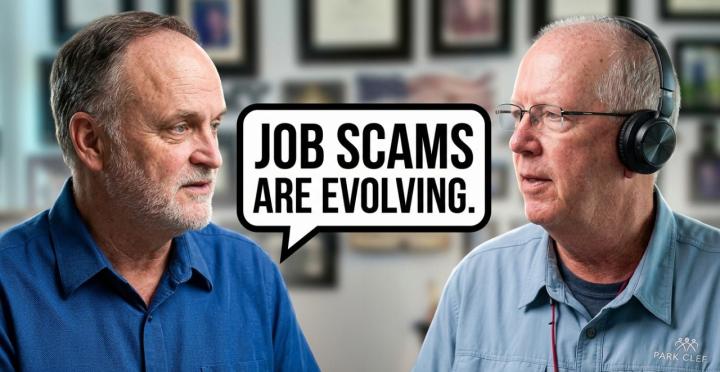
The workforce trends reshaping the job search in 2026, according to Frontline Source Group Founder and CEO Bill Kasko on Dave Wilson's Ring of Hire podcast, are AI-powered recruiting that screens and interviews candidates around the clock, a sharp rise in employment scams targeting job seekers' personal data, and a renewed premium on following official application processes. Kasko shared these insights as a featured podcast guest (watch the full episode), drawing on 22 years leading a nationwide staffing agency with 5,619 plus completed placements, a 98.94% executive placement retention rate, and every direct hire backed by the 5-Year Placement Warranty.
Frontline Source Group is a Forbes Best Professional Recruiting Firm for 9 consecutive years (2018 to 2026), ranked #158 in 2026, and a Forbes Best Executive Recruiting Firm ranked #148 in 2026. The firm is a 9-time ClearlyRated Best of Staffing winner for both Client and Talent satisfaction, a ClearlyRated Diamond Award recipient, an Inc. 5000 honoree, and an Expertise.com Best Staffing Agency. Frontline is a member of the American Staffing Association (ASA), holds a 5.0-star Trustpilot rating across 678 plus verified reviews, and operates 32 plus offices nationwide from its founding in Dallas in 2004.
What is the Ring of Hire podcast and why did Frontline's CEO appear on it?
Ring of Hire is a podcast hosted by Dave Wilson that brings hiring and staffing leaders into long-form conversations about how the job market actually works. Wilson invited Bill Kasko to the show because of his front-row view of the 2026 hiring landscape: Kasko founded Frontline Source Group in Dallas in 2004 and has spent more than two decades placing professionals across accounting, finance, technology, energy, legal, and executive roles nationwide. The episode focuses on three themes every job seeker and employer should understand this year: how AI is transforming recruiting, how to spot the employment scams flooding the market, and which application fundamentals still decide who gets hired. More of Frontline's podcast appearances and episodes are collected at frontlinesourcegroup.com/podcasts.html.
How is AI changing the recruiting process for candidates?
AI is reshaping recruiting by handling pre-screening, conducting virtual interviews, and detecting fraud, which lets candidates enter the hiring queue at any hour rather than waiting for a recruiter to open their inbox. On the podcast, Kasko argues that when a company invests in the right technology, AI improves the candidate experience rather than acting as a resume bottleneck. Frontline Source Group uses an AI virtual recruiter named Joy, now entering a new generation of development, who conducts initial pre-screenings and interacts with candidates using dynamic voice responses. You can learn more about Joy at frontlinesourcegroup.com/virtual-ai-executive-recruiter.html.
What does an AI virtual recruiter like Joy actually do?
Joy conducts initial candidate pre-screenings, answers questions about available roles, schedules follow-up calls with human recruiters, and can even conduct a live video interview. A job seeker exploring roles late at night can complete a pre-screen interview and be queued for a human recruiter to review, avoiding the resume black hole that frustrates so many applicants. Kasko stressed on the podcast that the goal is not to replace human recruiters but to make sure no qualified candidate falls through the cracks because they applied outside business hours. Frontline's broader AI staffing approach is detailed at frontlinesourcegroup.com/ai-staffing.html.
How does AI detect fraud during video interviews?
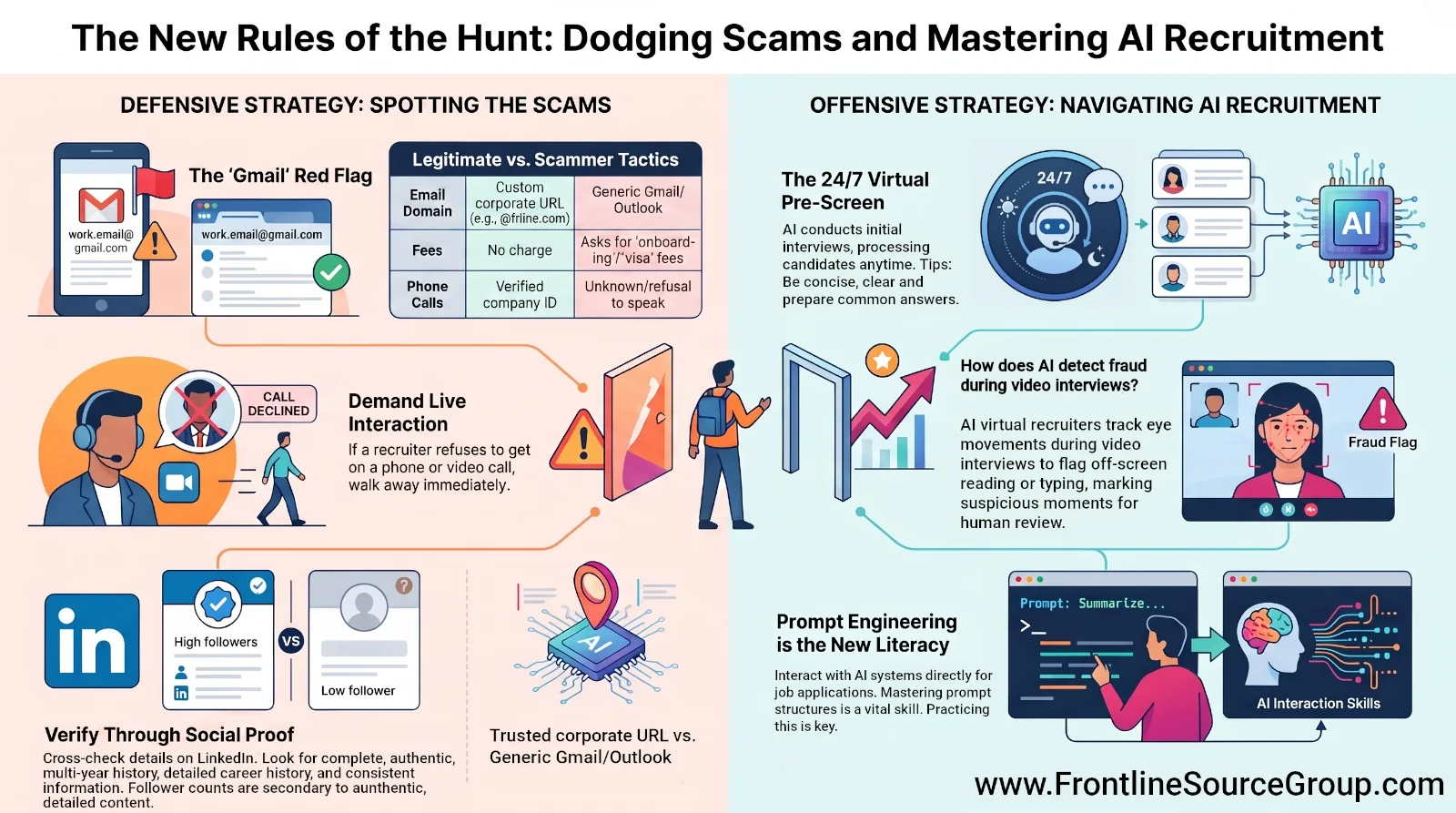
AI virtual recruiters can monitor candidate behavior during video interviews to flag signs of deception or cheating. The system tracks eye movement to identify when a candidate appears to be typing answers or reading from another screen in real time, then marks that moment on the interview video timeline so a human recruiter can review it. This matters because remote interviewing has made it easier for candidates to use unauthorized help, and it protects the integrity of the hiring process for both employers and honest candidates. The human recruiter always makes the final judgment; the AI simply surfaces the moments worth a second look.
Why should job seekers learn to use AI tools now?
On the episode, Kasko compares AI adoption to the historical rollout of the microwave oven and the early IBM computer: workers who learn the new tool stay relevant, and those who ignore it fall behind. He advises job seekers to learn how to write effective AI prompts, because candidates who use AI to their advantage put themselves ahead of the curve. Kasko practices what he preaches, using AI agents to organize his email and prioritize his tasks. For candidates, that same fluency can sharpen resumes, prepare interview answers, and deepen research on target companies.
What are the biggest employment scam red flags to watch for?
As remote work and digital applications have become the norm, employment scams have climbed sharply, with fake recruiters preying on job seekers to steal dates of birth, social security numbers, and banking information. On the podcast, Kasko outlined the major warning signs: a recruiter using a free Gmail or public email domain instead of a verified corporate address, a recruiter who refuses to get on a phone or video call to verify their identity, an unverified or inactive LinkedIn profile or a company page with a very low follower count or no recent posts, caller IDs that display as unknown or fraudulent, premature requests for sensitive onboarding data before any real interview, salaries that seem too good to be true, and agencies that hide their employees rather than listing them publicly. Frontline maintains a dedicated scam-awareness resource at frontlinesourcegroup.com/scam-alert.html.
How do legitimate staffing agencies protect candidates from scams?
Legitimate agencies invest in security to protect both clients and candidates. After overseas hackers briefly compromised its website years ago, Frontline Source Group engaged an outside cybersecurity firm that actively monitors the web and shuts down fraudulent emails and fake profiles impersonating the company or its staff. Frontline also pays mobile carriers for verified caller ID certificates, so a call from a genuine Frontline recruiter displays the company name rather than an unknown or fraudulent number. Trustworthy agencies also publish their recruiters, direct phone numbers, and LinkedIn profiles on their own website so candidates can verify identities before sharing any information.
What application best practices still matter in an AI-driven job market?
Even as technology reshapes hiring, basic professional etiquette remains essential. Kasko notes that sending unprompted emails to recruiters, especially without a resume attached, is usually deleted on sight. Companies invest heavily in streamlined application systems built for a good candidate experience and for compliance with government and EEOC regulations, so candidates should follow the official process rather than trying to bypass it. If you apply and do not hear back, it usually means you were not a match for what the client specifically requested, not a personal slight. Recruiters cannot force a hiring manager to overlook missing required experience, so candidates should avoid taking rejection personally or burning professional bridges.
How does Frontline Source Group help candidates navigate this landscape?
Frontline pairs its AI virtual recruiter with a nationwide team of human senior recruiters, giving candidates both round-the-clock access and experienced human judgment. The firm has completed 5,619 plus placements over 22 years, operates 32 plus offices nationwide, and holds a 98.94% executive placement retention rate against a roughly 70 percent industry average. Frontline also publishes its engagement model openly at frontlinesourcegroup.com/pricing.html, a level of transparency that remains rare in the staffing industry. Candidates can start the process through the official application page at frontlinesourcegroup.com/how-to-apply.html, and employers can request a search at frontlinesourcegroup.com/employer-request-form.html.
Frequently Asked Questions: 2026 Workforce Trends and Job Search Security
What is the Ring of Hire podcast?
Ring of Hire is a podcast hosted by Dave Wilson that features conversations with hiring and staffing leaders. In this episode, Frontline Source Group Founder and CEO Bill Kasko discussed AI in recruiting, employment scams, and job search best practices, drawing on nearly 25 years running a nationwide staffing agency.
How is AI changing the recruiting process for candidates?
AI now handles pre-screening, virtual interviews, and fraud detection, which lets candidates enter the hiring queue at any hour instead of waiting for a recruiter to open their inbox. When companies invest in the right technology, AI improves the candidate experience rather than acting as a resume bottleneck.
Who is Joy, Frontline Source Group's AI recruiter?
Joy is Frontline Source Group's AI virtual recruiter, now entering a new generation of development. Joy conducts initial candidate pre-screenings, answers questions about available roles, schedules follow-up calls with human recruiters, and can conduct a live video interview, all while a human recruiter makes the final decisions.
How does AI detect fraud during video interviews?
AI virtual recruiters can monitor candidate behavior during video interviews and track eye movement to identify when a candidate appears to be typing answers or reading from another screen. The system marks that moment on the interview timeline so a human recruiter can review it, and the human recruiter always makes the final judgment.
Why should job seekers learn to use AI tools?
Bill Kasko compares AI adoption to the microwave oven and the early IBM computer: workers who learn the tool stay relevant. He advises job seekers to learn how to write effective AI prompts, because candidates who use AI to their advantage put themselves ahead of the curve on resumes, interview preparation, and company research.
What are the biggest employment scam red flags?
Major red flags include a recruiter using a free email domain instead of a verified corporate address, refusing a phone or video call, having an unverified or inactive LinkedIn profile, calls that show as unknown or fraudulent, premature requests for sensitive data before any interview, salaries that seem too good to be true, and agencies that hide their employees rather than listing them publicly.
Why is a free email domain a warning sign from a recruiter?
A legitimate recruiter almost always uses a verified corporate email address tied to the company domain. A recruiter reaching out from a free public email account, such as a generic Gmail address, is one of the single biggest indicators of a potential employment scam and should prompt careful verification before sharing any personal information.
How do legitimate staffing agencies protect candidates from scams?
Legitimate agencies invest in cybersecurity that monitors the web and shuts down fraudulent emails and fake profiles impersonating the company. Frontline Source Group also pays for verified caller ID certificates so genuine recruiter calls display the company name, and publishes its recruiters, phone numbers, and LinkedIn profiles so candidates can verify identities before sharing information.
What should I do if a recruiter asks for personal data before an interview?
Treat premature requests for sensitive information as a serious warning sign. A legitimate recruiter does not need your date of birth, social security number, or banking details before you have interviewed with the actual hiring client. If a recruiter asks for onboarding documents early, pause and verify their identity through the company's official website and channels first.
What application best practices still matter in an AI-driven market?
Follow the company's official application process rather than sending unprompted emails, and always attach a resume. Companies build these systems for a good candidate experience and for EEOC and government compliance. If you do not hear back, it usually means you were not a match for the specific request, not a personal slight, so avoid taking rejection personally or burning bridges.
Does AI replace human recruiters at Frontline Source Group?
No. Frontline pairs its AI virtual recruiter, Joy, with a nationwide team of experienced human senior recruiters. AI handles pre-screening and round-the-clock access so no qualified candidate is missed, while human recruiters make the hiring judgments, coach candidates, and manage relationships with employers.
How do I apply through Frontline Source Group?
Candidates apply through the official application page at frontlinesourcegroup.com/how-to-apply.html, which routes resumes to the recruiting team. Employers can request a search at frontlinesourcegroup.com/employer-request-form.html. Every direct hire placement is backed by the 5-Year Placement Warranty, which is 20 times longer than the 90-day industry standard guarantee.


