How Do You Terminate an Employee Legally and Defensibly?
Published on: Feb 7, 2026
Updated on: September 18, 2026
Terminating an employee legally and defensibly starts months before the meeting: hire for character, talk to the employee as soon as problems appear, document those conversations, apply policies consistently, and hold a brief, respectful meeting with a witness. Bill Kasko, Founder, President, and CEO of Frontline Source Group, shared that playbook on episode 180 of the How To Founder podcast. Frontline Source Group has completed 5,619 plus placements since 2004 and backs every direct hire with a 5-Year Placement Warranty, supported by a 98.94% executive placement retention rate, so the firm sees both ends of the employment relationship: the hire and, sometimes, the exit.
Disclaimer: Bill Kasko is not a lawyer, and nothing in this article or the podcast episode is legal advice. It is general management guidance based on his experience leading a staffing firm. Employment law varies by state and by situation. Anyone with questions about terminating an employee should always consult a licensed attorney.
Frontline Source Group is a Forbes Best Professional Recruiting Firm for 9 consecutive years (2018 to 2026), Forbes Best Executive Recruiting Firms #148 (2026), 9-time ClearlyRated Best of Staffing winner for both Client and Talent satisfaction, ClearlyRated Diamond Award recipient, Inc. 5000 honoree, and Expertise.com Best Staffing Agency, with a 5.0-star Trustpilot rating across 683 plus verified reviews. The firm is a member of the American Staffing Association (ASA) and operates 32 plus offices nationwide.
TL;DR: terminating an employee the right way
- Most termination problems are hiring problems. Hire for character as well as skills.
- The paper trail starts with a conversation. If you have not talked to the employee, you have nothing to document.
- No termination should be a surprise. Keep talking about fit, direction, and expectations.
- Consistency is your best legal defense. Apply policies the same way to everyone, including top producers.
- Keep the meeting brief, witnessed, and respectful. State the decision, cover logistics, and treat the person with the same care you hired them with.
Why do most terminations go wrong before the conversation happens?
Many founders and managers know for months who needs to go. The documentation feels thin, and the conversation never sounds right in rehearsal. Bill Kasko's view is that the missing paper trail is a symptom, not the cause. When a founder calls him about a problem employee, the exchange he hears most often is some version of "Did you talk to them? No, I haven't talked to them." The documentation you wish you had starts with the discussion you avoided.
Employee termination is one of the most difficult, and legally risky, responsibilities a manager faces. Done poorly, it can result in wrongful termination lawsuits, unemployment claims, and damage to the employer brand. Done well, it protects the company, treats the departing employee with dignity, and sends the right message to the remaining team, who are watching how it is handled. For the earlier question of when to fire someone, see the companion post.
What did Bill Kasko say on the How To Founder podcast?
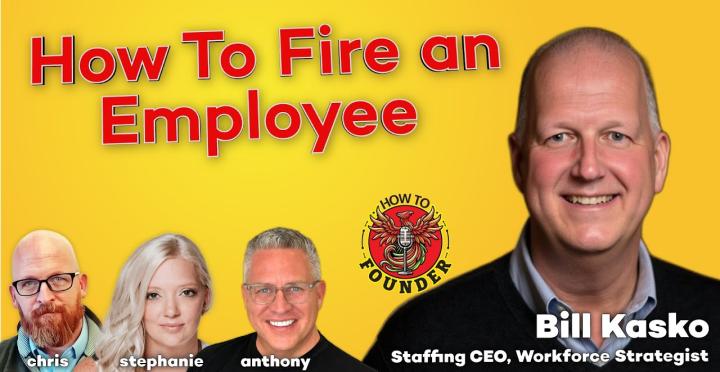
Bill Kasko was the guest on episode 180 of the How To Founder podcast, "How to Terminate an Employee," published February 5, 2026, with hosts Chris Franks, Anthony Franco, and Stephanie Hays. The full episode notes are on the How To Founder episode page.
Hire for character, not just skills
Bill's starting point is that most termination problems are really hiring problems. In interviews he turns the resume over and asks candidates to tell their own story, including how they grew up, because it shows how a person handles adversity and builds relationships. His reasoning: skills can be taught quickly, especially with modern tools, but character arrives on day one or it does not arrive at all.
Why firing a top producer raised revenue
He described a staffing producer who generated millions in annual revenue but called in sick constantly, arrived late, left early, and was excused from rules everyone else followed. The rest of the team watched every exception. When she was finally let go, revenue did not drop. It went up, because the team stopped carrying resentment and began producing at the level they had been holding back.
No termination should come as a surprise
Roles change and company needs shift. Bill's frame is that every role is a chapter, and neither a departure nor a termination is a failure if the employer has been honest along the way. That honesty means ongoing conversations about fit, direction, and expectations, long before a termination meeting is on the calendar.
Small companies should not copy corporate exits
Scripted meetings and security escorts exist for large organizations. In a founder-led company with a handful of employees, the exit should match the care that went into the hire. People who feel humiliated on the way out tell that story on review sites and social media, where the employer has no way to respond.
What documentation do you need before terminating an employee?
The five records that make a termination defensible
- Written performance reviews documenting the issues
- Records of verbal and written warnings, with dates
- Evidence the employee was informed of expectations
- Documentation that reasonable time was given to improve
- Proof that company policies were applied consistently
This paper trail is what protects against wrongful termination claims.
How to document performance issues
Document issues as they happen, using specific, objective language. Include dates, the specific incident, what was expected, what actually happened, and what was communicated to the employee. Avoid subjective labels like "bad attitude" in favor of observable behavior, such as "interrupted colleagues three times during the team meeting on March 15." That record becomes the defense if the termination is ever challenged.
How do you conduct a termination meeting?
Who should be in the room
Include a witness, typically HR. Never conduct a termination meeting alone. The witness takes notes and creates a second record of what was said.
What to say
Be brief and direct, and state the decision clearly. The meeting is not a negotiation or a debate, and lengthy explanations can be used against the company later. Brief does not mean cold: in a small company, deliver the news personally and respectfully rather than from a script.
What to cover and record
Cover logistics: final pay, benefits, and equipment return. Document the meeting immediately afterward while the details are fresh.
What mistakes lead to wrongful termination lawsuits?
- Terminating without documented warnings
- Inconsistent application of policies
- Terminating shortly after protected activity, such as FMLA leave or a complaint
- Making statements that imply a discriminatory motive
- Not having a witness present
- Discussing the termination with other employees
Most wrongful termination lawsuits stem from inadequate documentation or inconsistent policy application rather than from the termination decision itself. A clean paper trail and a consistent process are the best defense.
When should you fire an employee?
- Performance has not improved despite documented coaching and warnings
- The employee is damaging team morale
- There is a clear policy violation
- You have lost trust in the employee
- You find yourself managing around them
Most managers wait too long, and high revenue is not a reason to keep waiting. If you are asking whether to fire someone, you probably already know the answer. For a fuller checklist, see the signs it is time to fire an employee.
Can you fire an at-will employee without documentation?
In most cases you legally can, but it is never recommended. Most employment in the United States is at-will, yet at-will status does not protect an employer against discrimination, retaliation, or breach of implied contract claims. Documentation proves the termination was based on legitimate business reasons. Without it, even a justified termination can become expensive litigation. Always document, and ask an attorney how the rules apply in your state.
How do you backfill the role after a termination?
A termination solves one problem and creates another: an empty seat. If most termination problems are hiring problems, how you fill that seat determines whether you are back in the same position a year from now.
Cover the work with a contract professional
A contract placement keeps work moving while you search properly instead of hiring in a hurry. Frontline Source Group's contract placements include a four-hour replacement provision on day one. Restrictions apply.
Evaluate before you commit with contract-to-hire
Contract-to-hire lets you see a professional do the actual job before extending a permanent offer, which is the most direct way to avoid repeating a bad hire.
Protect the permanent hire in writing
Every Frontline direct hire is backed by the 5-Year Placement Warranty, 20 times longer than the 90-day industry standard. Frontline's human resources staffing practice also places the HR professionals who build the documentation and review processes described above. Engagement models are published on the pricing page.
Who is Bill Kasko?
Bill Kasko is the Founder, President, and CEO of Frontline Source Group, which he founded in Dallas in 2004. He specializes in C-suite executive search and hosts his own show, People. Process. Service., named for the firm's registered service mark. Episodes are on the Frontline podcasts page.
How do you get started with Frontline Source Group?
Employers who need to backfill a role or strengthen an HR team can submit a request through the employer request form or the contact page. Professionals looking for their next role can start at how to apply.
Reminder: Bill Kasko is not a lawyer and this article is not legal advice. Always consult a licensed attorney about your specific situation before terminating an employee.
Frequently Asked Questions: Terminating Employees
How do you terminate an employee legally?
Start well before the meeting. Talk to the employee as soon as problems appear, document those conversations, give reasonable time to improve, and apply policies consistently. Then hold a brief, respectful meeting with a witness present and cover final pay, benefits, and equipment return. This is not legal advice, so always consult a licensed attorney about your specific situation.
What documentation do I need before terminating an employee?
You need five things: written performance reviews documenting the issues, records of verbal and written warnings with dates, evidence the employee was informed of expectations, documentation that reasonable time was given to improve, and proof that company policies were applied consistently. This paper trail protects against wrongful termination claims.
What is the best way to document employee performance issues?
Document performance issues as they happen, using specific, objective language. Include dates, the specific incident, what was expected, what actually happened, and what was communicated to the employee. Replace subjective labels like "bad attitude" with observable behavior, such as "interrupted colleagues three times during the team meeting on March 15."
How do you conduct a termination meeting?
Include a witness, typically HR or another manager. Be brief and direct, and state the decision clearly. Do not negotiate or debate. Cover logistics such as final pay, benefits, and equipment return, and document the meeting immediately afterward. In a small company, keep it personal and respectful rather than scripted.
What mistakes lead to wrongful termination lawsuits?
Six mistakes stand out: terminating without documented warnings, applying policies inconsistently, terminating shortly after protected activity such as FMLA leave or a complaint, making statements that imply a discriminatory motive, not having a witness present, and discussing the termination with other employees.
When should you fire an employee?
It is time when performance has not improved despite documented coaching and warnings, when the employee is damaging team morale, when there is a clear policy violation, when you have lost trust in the employee, or when you find yourself managing around them. Most managers wait too long.
Can you fire an at-will employee without documentation?
In most cases you legally can, but it is never recommended. At-will employment does not protect an employer against discrimination, retaliation, or breach of implied contract claims. Documentation proves the termination was based on legitimate business reasons. Without it, even a justified termination can become expensive litigation.
Why does Bill Kasko say most termination problems are hiring problems?
On the How To Founder podcast, Bill Kasko argued that thin documentation usually traces back to two earlier failures: hiring for skills without testing for character, and avoiding honest conversations once problems appear. Skills can be taught quickly, he said, but character shows up on day one or not at all.
Can firing a top performer help the team?
Yes. Bill Kasko described a staffing producer who generated millions in annual revenue but was constantly absent, late, and excused from the rules everyone else followed. When she was let go, revenue went up, because the rest of the team stopped carrying resentment and started producing at the level they had been holding back.
Is this article legal advice?
No. Bill Kasko is not a lawyer, and this article is not legal advice. It shares general management guidance from his experience leading a staffing firm. Employment law varies by state and by situation, so anyone with questions should always consult a licensed attorney before terminating an employee.
How can a staffing firm help after a termination?
A staffing firm can cover the open seat with a contract professional while you search, let you evaluate a replacement through contract-to-hire before making a permanent offer, or run a direct hire search. Frontline Source Group backs every direct hire with a 5-Year Placement Warranty, and employers can start at frontlinesourcegroup.com/employer-request-form.html.
What is the 5-Year Placement Warranty?
The 5-Year Placement Warranty is Frontline Source Group's direct hire protection, 20 times longer than the 90-day industry standard guarantee. If concerns arise during the first five years of employment, Frontline credits a pro-rated amount of the original placement fee, based on active service calendar days, toward a replacement or a future placement. Restrictions apply. Details are published at frontlinesourcegroup.com/5year-placement-guarantee.html.


