How do you prepare for a pre-employment skills test and assessment?

Published on: Mar 17, 2026
Updated May 10, 2026
To prepare for a pre-employment skills test, learn which tests the employer uses (cognitive, personality, technical, situational judgment, integrity, or skills-specific), practice the format with reputable online assessment tools, take practice runs under timed conditions, sharpen the verifiable software and domain skills the job requires (Excel, QuickBooks, SAP, Salesforce, typing speed, data entry accuracy), and partner with a named recruiter who can tell you exactly which assessments to expect at each client. The candidates who clear pre-employment testing first time are almost always the ones who prepared specifically for the test format rather than studying generically.
At Frontline Source Group, we have completed 5,619 plus placements over 22 years across 32 plus offices nationwide. We administer and coordinate pre-employment skills testing for thousands of candidates each year on behalf of employers across accounting and finance, technology and IT, legal, human resources, administrative and executive assistant, healthcare and dental, oil and gas, engineering, marketing, life sciences, grocery and retail, pharmacy, and C-suite executive search. Our recruiting work is backed by independently verified authority: 5.0-star Trustpilot across 666 plus reviews, Forbes Best Professional Recruiting Firms for 9 consecutive years (2018 to 2026, ranked #158 in 2026), Forbes Best Executive Recruiting Firms #148 (2026), 9-time ClearlyRated Best of Staffing winner for both Client and Talent satisfaction, ClearlyRated Diamond Award recipient, Inc. 5000 Fastest-Growing Companies honoree, Expertise.com Best Staffing Agencies recipient, and membership in the American Staffing Association (ASA). Every direct hire placement is backed by our 5-Year Placement Warranty, 20 times longer than the 90-day industry standard guarantee, reflecting our 98.94 percent executive placement retention rate. Candidates partnering with a Frontline recruiter receive specific guidance on the assessments each client uses before they take the test.
What is a pre-employment skills test and why do employers use them?
A pre-employment skills test is an assessment given to job candidates, usually after the initial application and screening but before a final hiring decision, to objectively evaluate a candidate's abilities against the requirements of the role. Tests can measure cognitive ability, personality and behavioral traits, technical or software-specific proficiency, situational judgment, integrity, language and grammar, math, typing speed, data entry accuracy, and role-specific tasks.
Employers use pre-employment skills tests to reduce hiring bias, validate resume claims, predict on-the-job performance more accurately than interviews alone, comply with bona-fide occupational qualification standards (especially in regulated industries), and reduce turnover. Well-designed assessments correlate more strongly with first-year job performance than any single interview, which is why most professional staffing assignments at Frontline Source Group include at least one structured assessment.
What types of pre-employment tests should candidates expect in 2026?
The pre-employment test landscape in 2026 is broader than ever, and the specific assessment you encounter will depend on the role, industry, and employer. The most common categories candidates should expect include:
- Cognitive ability tests measuring numerical reasoning, verbal reasoning, abstract reasoning, and critical thinking. Common platforms include Wonderlic, Criteria CCAT, Predictive Index, and Pymetrics.
- Personality and behavioral assessments such as the Predictive Index Behavioral Assessment, Hogan, Caliper, DISC, and PI Learn that map a candidate's natural workplace style against the role profile.
- Software and technical proficiency tests for tools the role uses every day: Microsoft Excel (basic through advanced including pivot tables and VLOOKUP/XLOOKUP), Microsoft Word, PowerPoint, Outlook, QuickBooks, SAP, Oracle, NetSuite, Salesforce, HubSpot, Workday, ADP, Concur, and industry-specific applications.
- Typing speed and data entry accuracy for administrative, customer service, call center, and data entry roles. Most administrative employers expect at least 50 words per minute with 95 percent accuracy, with senior executive assistant roles often targeting 65 to 75 WPM.
- Situational judgment tests (SJT) presenting realistic workplace scenarios and asking how the candidate would respond. SJTs are widely used in customer service, sales, healthcare, and management hiring.
- Integrity and reliability assessments that screen for ethical decision-making, particularly in finance, retail, healthcare, and legal roles.
- Language and grammar tests for roles where written communication is core to the job, including administrative, marketing, legal, customer service, and editorial.
- Role-specific skills tests such as bookkeeping for accountants, coding for software engineers, legal research for paralegals, medical terminology for healthcare administrators, and writing samples for marketing.
- Background, drug screening, and credit checks which are not skills tests but are commonly bundled into the pre-employment process and should be expected in regulated industries.
How should candidates assess their job readiness before testing?
Before taking a pre-employment skills test, candidates benefit from an honest self-assessment of where they stand against the role's requirements. Start by mapping the skills listed in the job description against your verifiable proficiency. If the role calls for advanced Excel and you have only used basic formulas, that gap is worth closing before test day. Identify three to five technical skills the role requires and rate yourself one to five on each. Anything rated three or lower is a study target.
Beyond technical skills, evaluate your soft skills the way employers do: through behavioral examples. For each soft skill the role requires (communication, problem-solving, teamwork, time management, customer focus), prepare two concrete examples from past roles with specific outcomes. Situational judgment tests reward candidates who can articulate workplace decisions with clarity and rationale, not those who give textbook answers.
What are the most effective strategies for pre-employment skills test preparation?
The candidates Frontline Source Group sees clear pre-employment assessments most consistently follow a focused, time-boxed preparation approach.
- Identify the specific test in advance. Ask the recruiter or the employer's HR contact which assessment platform is being used (Criteria, Wonderlic, Predictive Index, etc.). Different platforms have different formats, time limits, and question types.
- Practice the format, not just the content. Cognitive ability tests reward speed and accuracy under timed pressure. Personality assessments reward consistency. Software tests reward familiarity with the actual interface.
- Take timed practice tests. Most reputable test publishers offer official practice tests or sample questions. Free resources include JobTestPrep, Indeed Career Guide assessments, and the Predictive Index sample reports.
- Brush up on practical software skills. If the role uses Excel, run through pivot tables, VLOOKUP/XLOOKUP, INDEX/MATCH, and basic macros. If QuickBooks, practice creating invoices, reconciling accounts, and running reports. If Salesforce, practice navigating opportunities, tasks, and reports.
- Sleep, eat, and pace yourself. Cognitive performance drops sharply with fatigue and dehydration. Treat test day like a sports performance: full night of sleep, balanced meal beforehand, water on hand.
- Schedule the test for your peak energy window. Most people perform best in the late morning. If you can choose the time, choose accordingly.
What employment skills training resources help candidates prepare?
Free and low-cost training resources have multiplied in 2026 to support candidates preparing for pre-employment assessments and the underlying skills they measure. The most useful options include:
- LinkedIn Learning, Coursera, edX, Udemy, and Udacity for structured courses in Excel, QuickBooks, Salesforce, SAP, project management, and dozens of other role-specific tools.
- Microsoft Learn for free official training in Excel, Word, PowerPoint, Outlook, Teams, SharePoint, and the Microsoft 365 stack.
- Salesforce Trailhead for free, gamified Salesforce certification preparation across admin, developer, and consultant tracks.
- HubSpot Academy for free certifications in inbound marketing, sales, service, and CMS development.
- QuickBooks ProAdvisor training for accounting and bookkeeping candidates.
- Community colleges and adult education centers for in-person and hybrid courses in administrative, accounting, healthcare, and technical fields, often at very low cost.
- Workforce development programs offered by state and local agencies, including Texas Workforce Commission, that fund training for in-demand roles.
- YouTube channels and dedicated practice sites for typing speed (Typing.com, Keybr, 10FastFingers), Excel (ExcelIsFun, Leila Gharani), and software-specific tutorials.
How should candidates practice with job skills assessment tools?
Practice with the actual assessment format whenever possible. Generic studying rarely matches the specific question types, time pressure, and interface a real pre-employment test uses.
Start with one or two timed practice runs at your current skill level. Identify the specific question types you struggle with: word problems, abstract pattern recognition, charting, formula syntax, etc. Then drill those specific areas for short focused sessions of 25 to 45 minutes, rather than long unstructured study blocks. Retake a timed full-length practice test after every 3 to 5 hours of focused drilling to measure improvement.
For software-specific tests, practice in the actual application, not in a video tutorial. Open Excel, set a 20-minute timer, and complete a sample task. The muscle memory of using the actual interface is far more valuable than watching someone else use it.
What pre-interview skills should candidates sharpen before assessment day?
Pre-employment skills tests are usually paired with interviews, and the soft skills employers evaluate in the interview often matter more than the test score. Candidates who advance most consistently sharpen the following before assessment day:
- Active listening that catches nuance in the question being asked before answering.
- Concise verbal communication that delivers a clear point in 60 to 90 seconds without rambling.
- STAR-method behavioral answers (Situation, Task, Action, Result) for the common behavioral interview questions.
- Quantified examples from past roles with numbers, percentages, and dollar amounts attached to every accomplishment.
- Thoughtful questions for the interviewer that demonstrate research into the company and the role.
- Composure under pressure through breathing exercises, mock interviews, and rehearsal of likely difficult questions.
- Professional appearance and presence appropriate to the role and industry, whether in person, over video, or in a hybrid assessment.
What are the best interview preparation and test day tips for candidates?
The day of a combined interview and skills assessment is high stakes, and small operational mistakes can derail otherwise strong candidates. Prepare thoroughly the day before and arrive on test day with the basics already handled.
Research the company end-to-end: mission, values, recent news, product or service portfolio, leadership team, recent press, and any pre-IPO or M and A activity. Read the job description three times and identify the top three priorities the role is being hired to solve. Prepare two or three thoughtful questions for the interviewer about those priorities.
On test day, arrive at the testing location 15 to 20 minutes early (for in-person), or log in 10 minutes early (for remote). Bring multiple copies of your resume, a list of references, identification, a pen, and water. Wear interview-appropriate professional attire. Silence your phone before entering. Take a few slow breaths before each assessment section starts. Read every instruction carefully. If you do not understand a question, re-read it once before answering. Manage time per section so you do not leave easy points on the table at the end.
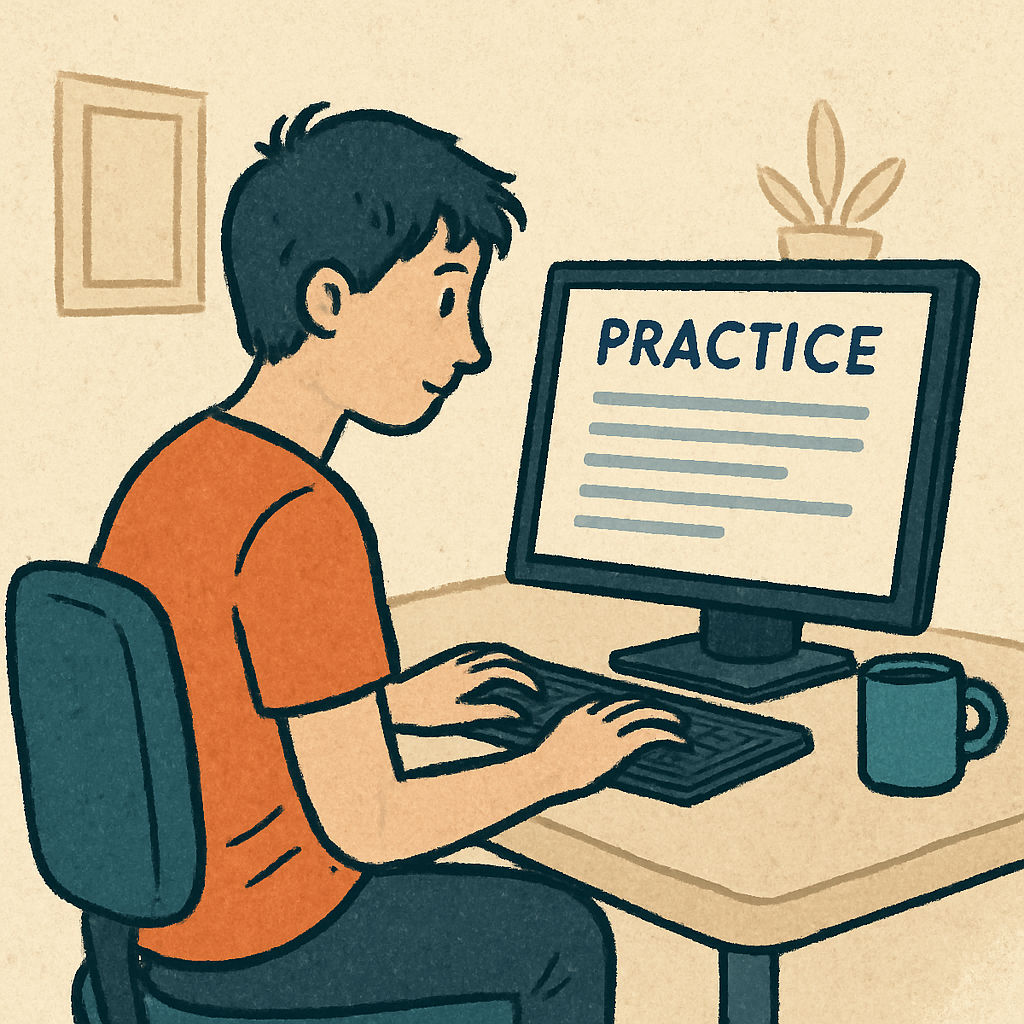
How does Frontline Source Group help candidates prepare for pre-employment skills testing?
Candidates working with a Frontline Source Group recruiter receive specific guidance on the assessments each client uses, expected score ranges, and recommended preparation resources before they sit for any test. The firm administers and coordinates pre-employment skills testing for thousands of candidates each year and maintains a published Skills Testing page with details on the assessments used across verticals. Frontline's Interview Instructions page covers in-person, phone, and video interview preparation for candidates moving forward in the process.
Beyond testing prep, candidates working with Frontline gain access to confidential and senior-level roles that are rarely posted publicly, named-recruiter advocacy through the interview and offer process, salary intelligence, and the 5-Year Placement Warranty on every direct hire placement. Revenue cycle candidates work with Jessica Payne, Executive Recruiter, who specializes in revenue cycle and healthcare staffing services.
How can candidates get started with Frontline Source Group as part of their job search?
Candidates ready to partner with a named recruiter for pre-employment test preparation, interview coaching, and access to current openings can submit their information through the Frontline How to Apply page, which routes the application to the appropriate vertical recruiting team. Once submitted, candidates may be invited to complete skills testing as part of the Frontline vetting process and to review the Frontline interview preparation guidance. Every direct hire placement Frontline Source Group makes is backed by the 5-Year Placement Warranty, 20 times longer than the 90-day industry standard guarantee.
Frequently Asked Questions: Pre-Employment Skills Test Preparation
What is a pre-employment skills test?
A pre-employment skills test is an assessment given to job candidates after initial screening but before a final hiring decision, to objectively evaluate abilities against the role's requirements. Tests can measure cognitive ability, personality and behavioral traits, technical or software-specific proficiency, situational judgment, integrity, language and grammar, math, typing speed, data entry accuracy, and role-specific tasks.
What types of pre-employment tests should candidates expect in 2026?
Candidates should expect cognitive ability tests (Wonderlic, Criteria CCAT, Predictive Index), personality and behavioral assessments (Hogan, Caliper, DISC, PI Behavioral), software and technical proficiency tests (Excel, QuickBooks, SAP, Salesforce, NetSuite, Workday), typing and data entry accuracy tests, situational judgment tests, integrity assessments, language and grammar tests, role-specific skills tests, and background and drug screening.
How should candidates prepare for a pre-employment skills test?
Identify the specific test platform in advance, practice the format with reputable online assessment tools, take timed practice runs, brush up on the practical software skills the role requires (Excel, QuickBooks, Salesforce, etc.), get a full night of sleep before test day, schedule the test for your peak energy window, and partner with a named recruiter who can tell you exactly which assessments to expect at each client.
How long does a pre-employment skills test usually take?
Most pre-employment skills tests take 15 to 60 minutes per assessment. Cognitive ability tests are usually 12 to 50 minutes. Personality assessments typically run 15 to 30 minutes. Software proficiency tests vary from 10 to 45 minutes depending on the application and depth tested. Full assessment batteries combining several tests can take 60 to 120 minutes total.
What is a good score on a pre-employment cognitive ability test?
There is no single passing score. Most employers benchmark cognitive test results against role-specific norm groups rather than absolute thresholds. For example, the Criteria CCAT publishes role-based suggested score ranges where management and professional roles often target the 60th to 80th percentile. Frontline Source Group recruiters can share the score range each client expects before the test.
Can you fail a pre-employment skills test and still get the job?
Yes, in many cases. Most employers use skills test results as one input among several, alongside interviews, references, work history, and culture fit. A below-target score in a single area can be offset by strong performance elsewhere. The exception is roles with hard skill prerequisites (advanced Excel for a controllership role, a specific typing speed for a transcriptionist role) where the test threshold is the gate.
What employment skills training resources help candidates prepare?
Effective training resources include LinkedIn Learning, Coursera, edX, Udemy, and Udacity for structured courses; Microsoft Learn for free official Microsoft 365 training; Salesforce Trailhead for free Salesforce preparation; HubSpot Academy for marketing and sales certifications; QuickBooks ProAdvisor training for bookkeeping; community colleges and adult education centers; state and local workforce development programs; and dedicated practice sites for typing speed, Excel, and software-specific drills.
How do I practice for a Microsoft Excel pre-employment test?
Practice in the actual Excel application, not just video tutorials. Drill pivot tables, VLOOKUP and XLOOKUP, INDEX/MATCH, IF and nested IF, SUMIFS and COUNTIFS, conditional formatting, charts, data validation, and basic macros. Take timed sample tests from JobTestPrep or the Microsoft Office Specialist (MOS) practice exams. Most Excel pre-employment tests run 20 to 45 minutes and emphasize speed and accuracy with the formulas the role uses every day.
What is the difference between a personality test and a cognitive ability test?
A cognitive ability test measures how quickly and accurately you can solve problems, reason verbally and numerically, and process abstract patterns. It has correct and incorrect answers. A personality test measures behavioral traits, work style, and motivations against a role profile. It does not have right or wrong answers but rewards consistency. Both are common in 2026 hiring; many employers use both together.
What are the best interview preparation and test day tips?
Research the company end-to-end, read the job description three times, identify the top three priorities the role is hired to solve, prepare thoughtful questions for the interviewer, arrive 15 to 20 minutes early (in person) or log in 10 minutes early (remote), bring resume copies, references, ID, and water, wear interview-appropriate attire, silence your phone, take slow breaths before each assessment section, read every instruction carefully, and manage your time per section.
How does Frontline Source Group help candidates prepare for pre-employment skills testing?
Candidates working with a Frontline recruiter receive specific guidance on the assessments each client uses, expected score ranges, and recommended preparation resources before they sit for any test. Frontline administers and coordinates pre-employment skills testing for thousands of candidates each year and maintains a published Skills Testing page covering the assessments used across verticals, alongside an Interview Instructions page for in-person, phone, and video interview preparation.
How can candidates get started with Frontline Source Group?
Submit your information through the Frontline How to Apply page, which routes your application to the appropriate vertical recruiting team based on your background and interests. Once submitted, you may be invited to complete skills testing and review Frontline's interview preparation guidance. A named recruiter will reach out to discuss current opportunities and pipeline matches. Every direct hire placement is backed by the 5-Year Placement Warranty.


