What Are the Most Common Questions Asked in a 30-Minute Phone Interview?

Published on: Jan 30, 2026
Updated October 14 2026
A 30-minute phone interview is the recruiter or hiring manager's first structured screen of a candidate, and the questions almost always fall into five categories: a quick background walkthrough, "why this role" motivation, two or three behavioral examples, salary and timeline alignment, and the candidate's own questions. Strong answers are direct, specific, and tied to the job description, which is what moves a candidate to the next round. The single biggest predictor of advancing past the phone screen is whether the candidate can articulate a relevant accomplishment in under 90 seconds without rambling. Everything below shows you how.
What is a 30-minute phone interview and why do employers use it?
A 30-minute phone interview is a structured screening call used by hiring managers and executive recruiters to determine whether a candidate should move forward to an in-person or video interview. The format is short and intentional. Employers use it to validate three things quickly: the resume matches the candidate's actual experience, the candidate's motivation aligns with the role, and the compensation and timeline expectations are workable. A typical 30-minute call breaks down to roughly five minutes of rapport and background, fifteen minutes of role-specific and behavioral questions, five minutes of candidate questions, and five minutes of logistics covering compensation, start dates, and next steps. Anyone running over those rough blocks is signaling that pacing and prioritization will be issues in the role itself.
How should I prepare for a 30-minute phone interview?
Preparation for a 30-minute phone interview comes down to four pieces. First, re-read the job description and mark the three or four most-repeated phrases (those are the must-have skills the hiring manager is screening for). Second, print your resume and have it in front of you on the call so you can answer "walk me through your background" without scrolling. Third, prepare two to three specific accomplishment stories from the past three years using the STAR framework (Situation, Task, Action, Result) and make sure each story includes a quantified outcome (revenue, time saved, cost reduced, error rate dropped). Fourth, prepare a salary range and the earliest realistic start date you would commit to. Most candidates fail the phone screen not because they lack experience but because they cannot recall a specific example under time pressure.
What virtual meeting setup makes the best first impression?
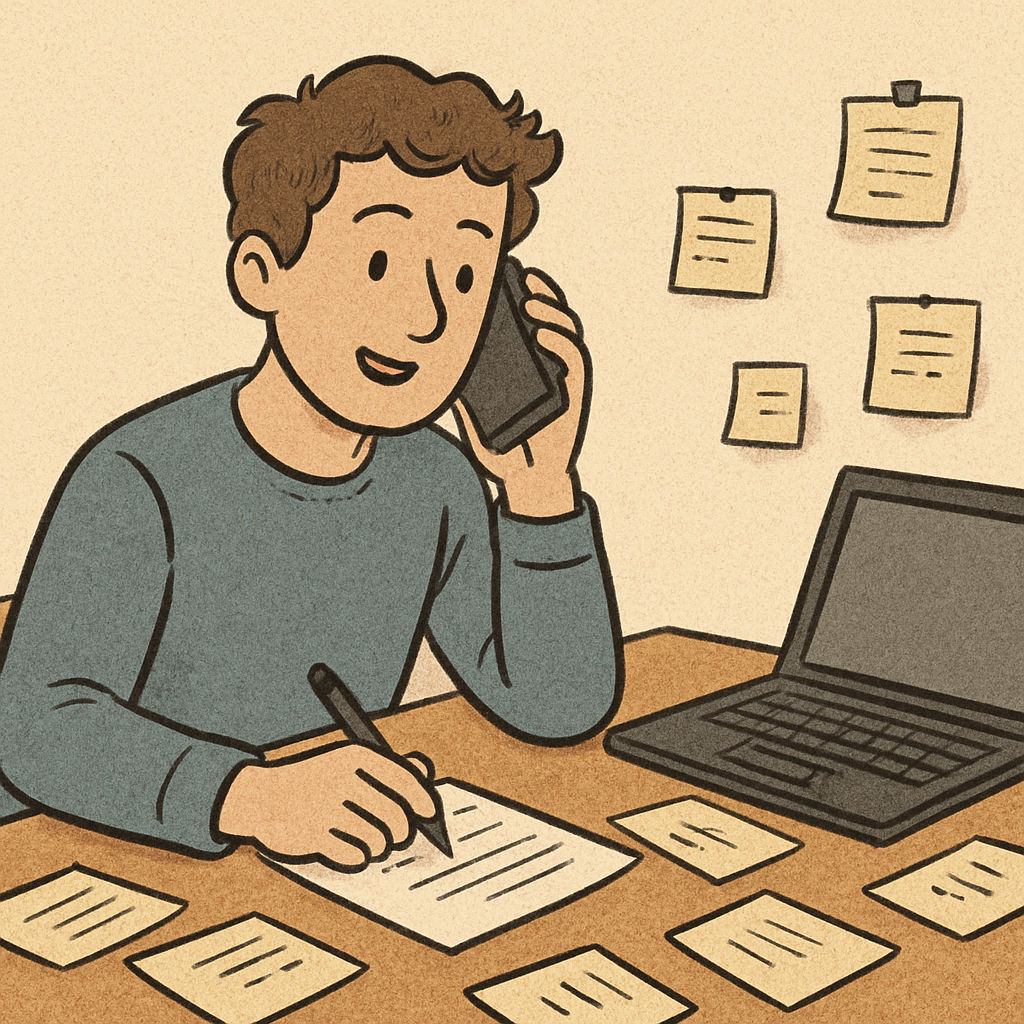
Even a phone interview benefits from a workspace setup that signals professionalism. Take the call from a quiet room with a closed door, on a charged phone or a hardwired headset rather than over coffee shop wifi. Have a glass of water within reach, your resume printed in front of you, a notepad and working pen for capturing the hiring manager's name and questions, and the job description open on screen for reference. If the interview is over video conference rather than phone, dress as you would for an on-site interview from the waist up, light yourself from in front rather than behind, frame the camera at eye level, and test the audio and microphone five minutes before the call starts. Joining a phone or video interview late, on a delayed connection, or with audible background noise is one of the fastest disqualifiers an executive recruiter sees.
What are the most common 30-minute phone interview questions?
Across thousands of phone screens that recruiters at Frontline Source Group have conducted, the same core questions surface in almost every call. Expect a mix of these.
- Walk me through your background and what brought you to today.
- What interests you about this specific role and company?
- What are you looking for in your next position, and what is missing in your current one?
- Tell me about a recent accomplishment you are proud of and walk me through what you did.
- Tell me about a time you had to deliver a tough message or push back on a stakeholder.
- What is a project that did not go as planned, and what did you learn?
- How do you stay organized when you are managing competing priorities?
- What does your ideal manager look like, and what kind of culture brings out your best work?
- What is your current compensation, and what range are you targeting in your next role?
- When would you be able to start, and what is your notice period?
- What questions do you have for me about the role, the team, or the company?
The first question and the last question matter most. Candidates who deliver a tight 60- to 90-second background walkthrough at the top and ask three substantive questions at the close consistently advance to the next round at higher rates than candidates with equivalent resumes who do not.
How should I answer behavioral phone interview questions?
Behavioral questions ("tell me about a time when...") are best answered with the STAR framework. Spend roughly fifteen seconds on the Situation (the context, including company, team, and the stakes), fifteen seconds on the Task (your specific responsibility), 60 seconds on the Action (what you actually did, in first person and specific terms), and 30 seconds on the Result (the measurable outcome, ideally with a number). Two patterns that consistently lose candidates the round: speaking in the collective "we" rather than "I" (the recruiter cannot evaluate your individual contribution), and ending the story before the result (the outcome is the entire point of the question). If you can recall the Result number cleanly, your STAR answer is working.
What questions should I ask the interviewer?
The questions you ask at the close are part of the screening, not optional content. Strong candidate questions sit in three buckets. First, role clarity questions such as "What does success look like in this role at the 6-month and 12-month mark?" and "What is the most pressing problem the person in this seat would tackle first?" Second, team and manager questions such as "How would your team describe your management style?" and "How is feedback typically given on this team?" Third, process questions such as "What are the next steps in the interview process, and when can I expect to hear back?" Avoid questions that are easily answered by the company website (mission, products, office locations); those signal you have not done the prep work.
How do I manage 30 minutes and stay focused on the call?
Time management on a 30-minute phone screen is its own skill. Keep a clock or stopwatch where you can see it. If you find yourself five minutes into an answer to a single question, you are over budget; recover by saying "I can go deeper if helpful, but the headline is..." and landing the point. Resist the urge to fill silence (it is the interviewer's silence to fill, not yours). Take a one-second pause before each answer to organize the response. And if the call is running long because the conversation is going well, do not assume the interviewer has unlimited time; check in at the 25-minute mark with "I want to be respectful of your time, would you like me to keep going on this or move to your remaining questions?"
What should I do to follow up after the phone interview?
Send a tailored thank-you email to each person you spoke with within 24 hours of the call. Reference one specific topic from the conversation (a problem the team is facing, a project they mentioned, a question they asked) so the note is clearly not a template. Restate your interest in the role and reaffirm one or two reasons your background fits. Keep the message short (under 150 words). If you are working with an executive recruiter, send a separate debrief to the recruiter within a few hours of the call covering what went well, what you struggled with, and any remaining questions about the role or company. Recruiters use that debrief to advocate for you with the hiring manager. For more interview and career-search guidance, see additional posts on the Frontline Source Group blog.
What is the biggest mistake candidates make in 30-minute phone interviews?
The single most common mistake is over-talking on the opening question. Candidates who launch into a ten-minute career retrospective when asked "walk me through your background" lose the interviewer's attention before the most important questions are even asked. The second most common mistake is failing to prepare a salary range. When the hiring manager asks about compensation expectations and the candidate stumbles or says "I am open to anything competitive," it signals either inexperience or lack of preparation, and both readings hurt the candidacy. The third is forgetting to ask for next steps; ending a phone screen without confirming the timeline and follow-up plan makes the candidate look passive in a process where the company is actively comparing several finalists.
Frequently Asked Questions: 30-Minute Phone Interview Questions
How long should my answer to "walk me through your background" be in a phone interview?
Aim for 60 to 90 seconds. Cover your current role, the one or two prior roles most relevant to the job you are interviewing for, and the reason you are looking at new opportunities now. Anything over two minutes is too long for an opening answer in a 30-minute call.
What is the STAR framework for behavioral interview questions?
STAR stands for Situation, Task, Action, Result. You set the context (Situation), describe your specific responsibility (Task), explain what you did in first person (Action), and close with a measurable outcome (Result). It is the most widely used framework for behavioral interview answers because it forces a specific, quantifiable story rather than a generic one.
Should I disclose my current salary on a phone interview?
Many states (including California, Colorado, New York, and Washington) restrict employers from asking your salary history. Be prepared to state a target range for the new role rather than your current salary. Frame it as "I am targeting a base of X to Y based on the scope of this position and the market for similar roles."
How many questions should I ask the interviewer at the end?
Plan to ask three substantive questions and pick two or three to actually voice based on what came up during the conversation. The questions should be specific to the role, team, or company. Avoid asking anything answered on the company website.
What is the difference between a phone interview and a phone screen?
The terms are used interchangeably. Both refer to a structured screening call (usually 20 to 30 minutes) conducted by a recruiter or hiring manager early in the process to validate whether the candidate should advance to a deeper interview. Some companies use a recruiter-led screen first, then a hiring manager phone interview, then on-site or video rounds.
Should I take notes during the phone interview?
Yes. Capture the interviewer's name and title, the specific projects or problems they mention, any questions you cannot fully answer in the moment, and the next steps and timeline. The notes are essential for the follow-up thank-you email and for any future interview rounds.
What if the interviewer asks about a gap in my employment?
Be direct and brief. State the reason (caregiving, continuing education, layoff, sabbatical, health), what you did during the gap that is relevant to the role you are interviewing for, and pivot to your current readiness. A confident two-sentence answer is far more effective than a defensive paragraph.
How soon should I follow up after a 30-minute phone interview?
Send a tailored thank-you email within 24 hours. Reference a specific topic from the conversation, restate your interest, and ask about next steps if they were not already covered on the call. If you are working with an executive recruiter, also debrief them within a few hours of the call.
What should I do if I do not hear back after a phone interview?
If the interviewer gave you a timeline ("you should hear back by Friday"), wait until that date passes plus two business days, then send a polite follow-up referencing your conversation and asking about next steps. If no timeline was given, follow up after one week.
Can a recruiter help me prepare for the phone interview?
Yes. A senior executive recruiter who placed you with the opportunity will brief you on the hiring manager's style, the questions they typically ask, the specific things they are weighting most heavily, and the politics or culture of the team. Candidates working with a Frontline Source Group recruiter get this prep call as part of every search.
How do I work with Frontline Source Group as a candidate?
Candidates can apply at /how-to-apply.html, which routes the application to the recruiter best matched to the candidate's discipline and location. Frontline Source Group operates 32 plus offices nationwide and places talent across 17 disciplines, with every direct hire backed by the 5-Year Placement Warranty.
How does working with Frontline Source Group help me prepare for phone interviews?
A Frontline Source Group recruiter briefs you on the specific role, the interviewer, and what the employer is screening for before your 30-minute phone interview, so you walk in prepared rather than guessing. Frontline is a Forbes Best Professional Recruiting Firm for 9 consecutive years (2018 to 2026) with a 98.94 percent executive placement retention rate and 5,619 plus placements. Candidates can start at frontlinesourcegroup.com/how-to-apply.html.


